
Is Polyaspartic Coating a Good Choice for Pool Decks?
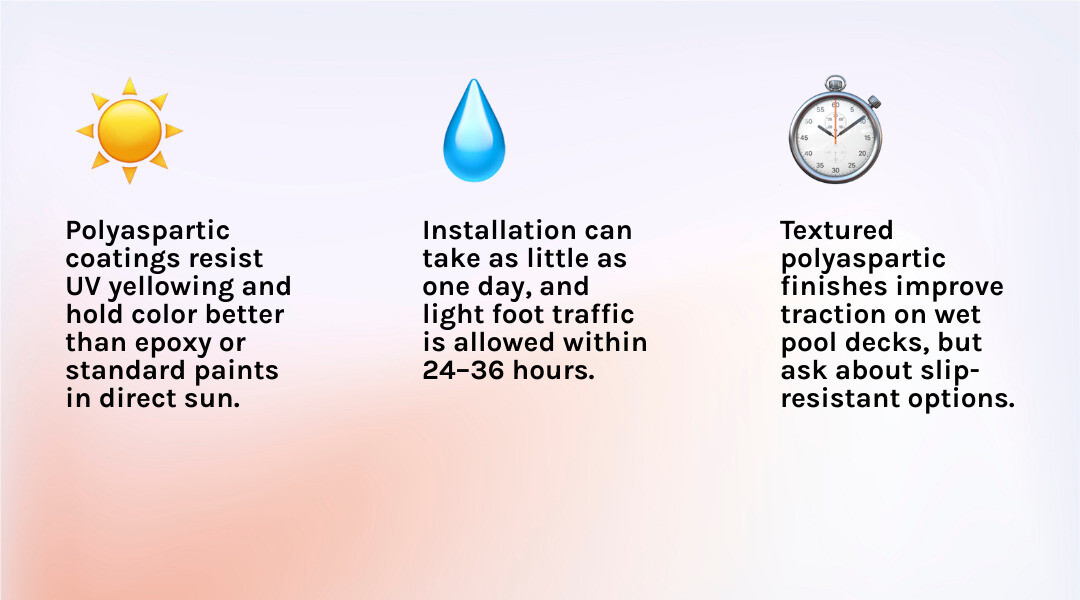
Polyaspartic coating—a protective resin finish—for pool decks is a good choice if you want to refresh sound concrete without replacing it. A clear protective finishing layer, called a topcoat, that resists ultraviolet (UV) light helps the finish hold its color in the sun, while a textured surface can improve traction around the pool. Wet surfaces can still be slippery, so ask about texture before choosing a finish. If barefoot comfort matters, check how the color and texture feel in direct sun, too.
At Checkmate Coatings, we grind the concrete with diamond tooling to help the coating bond to the surface, apply a polyurea resin base coat as the bonding layer, spread decorative flakes until they cover the entire surface, and finish with a polyaspartic clear protective coat. Installation can take as little as one day; follow our crew’s instructions for when light foot traffic can resume.
Why We Choose Polyaspartic Coating for Pool Decks
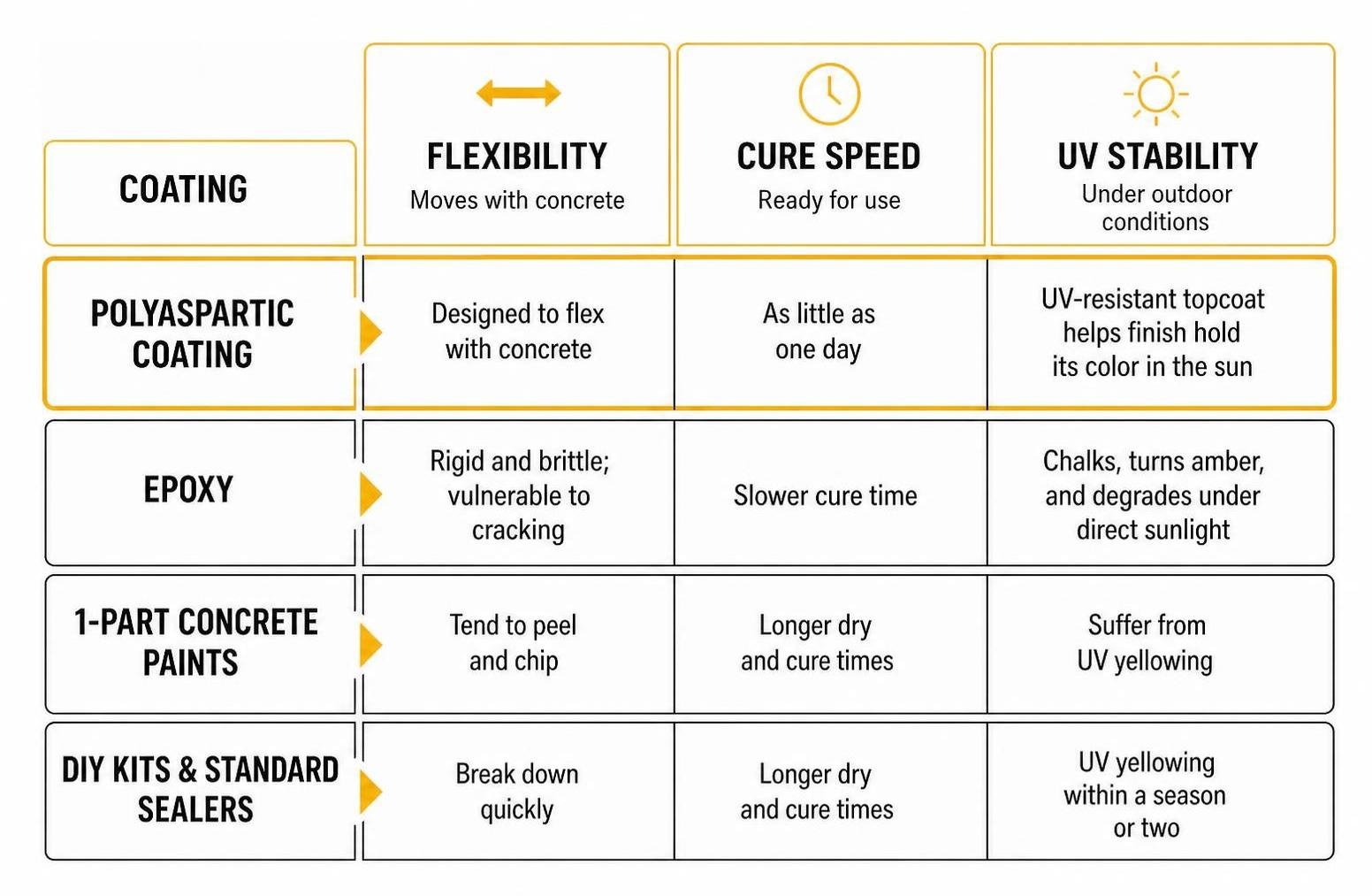
Pool decks face some of the harshest conditions of any outdoor living space. Constant sun exposure, temperature swings, splashing water, pool sanitizers, and active foot traffic all take a toll on bare or poorly protected concrete. We do not use standard sealers, one-part concrete paints, or do-it-yourself kits for residential coatings because, depending on the product and application, peeling, frequent recoating, and hot-tire pickup on vehicle surfaces can limit their suitability. Hot-tire pickup means the coating lifts beneath hot tires. We choose our polyurea and polyaspartic flake system for fast curing (hardening), UV stability, durability, and straightforward maintenance. When comparing alternatives, check each manufacturer’s cure requirements, sunlight resistance, adhesion (how well the coating bonds to concrete), and recoating guidance. For vehicle surfaces, also check resistance to hot-tire pickup.
Some commercial projects specify epoxy—a coating made by mixing a resin and hardener—for indoor or climate-controlled industrial settings. Potential UV yellowing outdoors and longer cure times are reasons we do not use it for residential pool decks; we choose our polyurea and polyaspartic system for outdoor exposure and longer-lasting performance.
Our specialized pool deck coatings pair a deep-penetrating polyurea base coat with an advanced polyaspartic clear topcoat. The system is designed to provide a durable finish that can accommodate normal concrete movement around a pool. This elasticity is vital around a pool, where ground moisture and expansion as the concrete heats up outdoors cause concrete slabs to move naturally. Instead of fracturing or losing adhesion, our flexible system moves with your concrete.
Cost and Maintenance Considerations for Pool Deck Coatings
When evaluating your pool deck resurfacing options, looking at the total cost over the life of the floor tells the real story. When comparing do-it-yourself paints and thin sealers, include any future surface preparation and reapplication in the total cost, not just the initial purchase. Those repeated labor costs, product purchases, and weekends lost to maintenance add up fast.
We install a multi-layer system with a polyurea base coat and polyaspartic topcoat for durability, stain resistance, and straightforward routine cleaning. To compare long-term value, consider installation, routine cleaning, and potential repair or recoating costs over the life of the floor.
Resistance to Sun, Chemicals, and High Foot Traffic

A swimming pool environment is chemically aggressive. Whether your pool uses traditional liquid chlorine, chlorine tablets, or a saltwater generator that uses electricity to produce chlorine from dissolved salt, your deck is regularly exposed to harsh splash-out, water discharged during pool-filter cleaning, and balancing chemicals.
Our polyaspartic clear topcoat provides a protective layer over the concrete and is designed for resistance to pool chemicals. Bare concrete and porous stone can absorb chemicals and develop efflorescence, a white mineral deposit. Around a pool, exposures may include sanitizers, chemicals that adjust the water’s acidity (pH balancers), suntan lotions, and salt crystals. The coating helps protect the concrete, but it is not an impenetrable barrier or a guarantee against corrosion of steel reinforcement, spalling—pieces breaking away from the surface—or discoloration.
UV Stability and Surface Temperature Considerations
Sunlight resistance is an important consideration when selecting an outdoor concrete coating. A UV-resistant polyaspartic topcoat can help the finish retain its appearance under regular sun exposure.
Surface temperature is another major consideration for barefoot pool areas. Any outdoor surface exposed to direct sunlight will absorb heat. However, our full-broadcast flake systems, with decorative flakes covering the entire surface, help diffuse direct light better than dark, flat concrete or solid-color slabs. When planning your pool deck or matching your patio concrete finishes, choosing lighter flake blends can noticeably improve barefoot comfort during peak summer afternoons.
How Long Does Polyaspartic Coating for Pool Decks Last Under Intense Sun?
We install our system for long-lasting outdoor performance, starting with mechanical surface preparation to help the polyurea base coat bond to the concrete. The UV-resistant polyaspartic topcoat helps protect the finish under regular sun exposure. Service life depends on concrete condition, installation, exposure, and care; no coating is guaranteed never to wear, flake, or delaminate—separate from the layer beneath it.
Whether you choose a neutral tone like our Stonewash patio and deck system or a vibrant blend, the color stability and chemical resistance remain locked in. Backed by our residential Stress-Free Warranty, you can trust that your outdoor investment is protected against peeling and premature wear.
Safety, Traction, and Aesthetic Flake Customization

Safety is the top priority around any swimming pool. Wet, smooth concrete or untextured high-gloss coatings can become slippery hazards for running kids and entertaining guests. Achieving the right balance between cleanability and slip resistance is essential.
Texture Options for Pool Decks
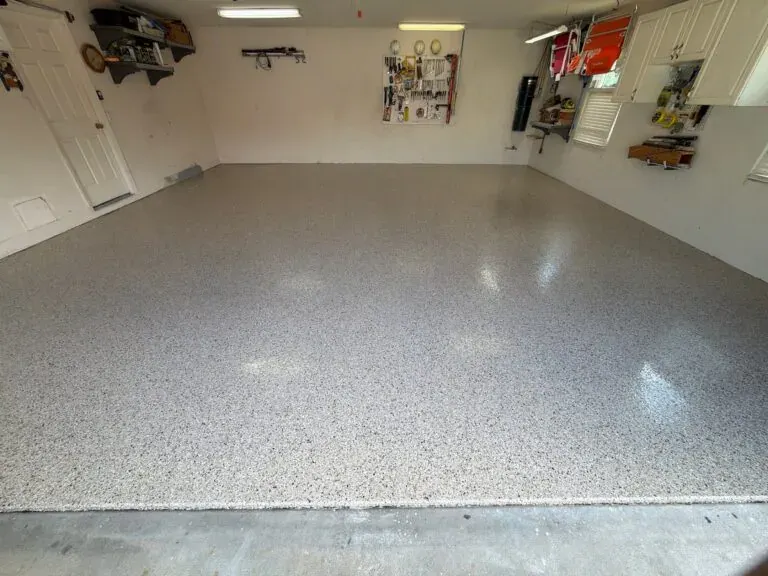
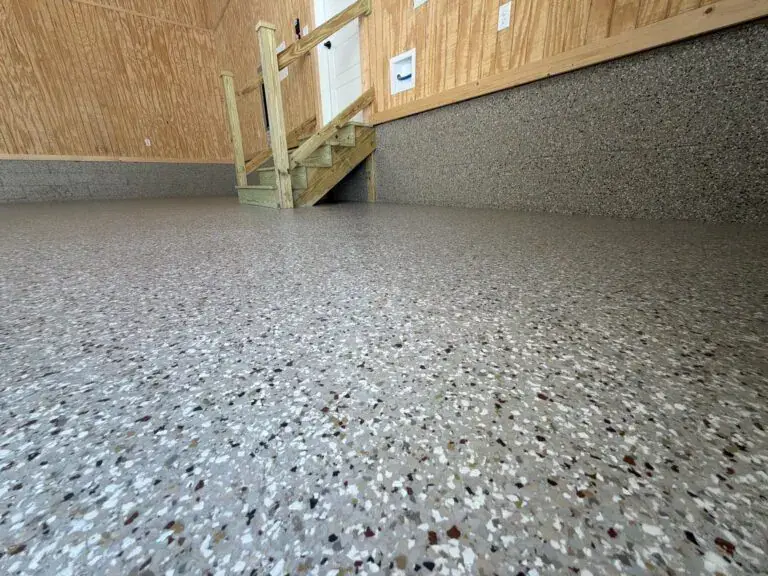
At Checkmate Coatings, every residential coating features a full-broadcast flake finish. We spread color chips into the wet base coat until it is fully covered and no more flakes will stick—a method called broadcasting to rejection. These flakes create an orange-peel, multi-dimensional texture, with flakes visible across the entire coated surface.
To improve traction on wet pool surrounds, we can incorporate specialized slip-resistant additives—such as fine silica sand or very small plastic particles that add grip—into the polyaspartic clear topcoat. We help you choose a texture that balances traction, barefoot comfort, and hose-down cleaning. Wet surfaces can still be slippery.
Full-Broadcast Flake Colors and Finishes
Your pool deck should complement your home’s architecture, landscaping, and outdoor furniture. Our wide variety of decorative coating colors allows you to customize the exact look you want. Every color blend can be installed across any concrete surface, from concrete surrounds beside pools and covered outdoor living areas to walkways and garages.
Homeowners looking for coastal or aquatic tones frequently gravitate toward the brilliant blues and grays of our Tidal Wave blend, while those seeking natural earthy hues often select our popular Outback flake finish. You can explore our extensive gallery of completed projects to see how different chip combinations transform real backyards.
The Professional Installation Process and Timeline
A high-performance coating is only as reliable as the concrete preparation underneath it. Acid washing or pressure washing alone does not replace our diamond-grinding preparation for coating adhesion. Our trained, in-house installation crews, who are company employees rather than subcontractors (W2 employees), manage every step of the installation using industrial equipment.

Step-by-Step Application and Fast Curing
Our installation follows a rigorous, proven sequence:
- Mechanical Diamond Grinding: We grind the entire concrete deck using heavy-duty diamond tooling connected to dust extractors with high-efficiency particulate air (HEPA) filters that capture fine dust. This removes old paints, opens the concrete pores, and creates a textured surface for coating adhesion, described as Concrete Surface Profile (CSP) 2–3 on the industry’s surface-roughness scale.
- Concrete Repair: We open cracks with a cutting tool before repairing them, and mend chipped areas and small surface pits using high-strength polyurea patching compounds that cure flush with the slab.
- Polyurea Base Coat: We apply a commercial-grade polyurea base coat formulated without evaporating water or solvents (100% solids) that penetrates the concrete’s tiny pores.
- Full Flake Broadcast: We broadcast your chosen decorative flakes across the entire wet base coat until the floor is completely covered.
- Scrape and Vacuum: Once cured, we reclaim excess chips and scrape the surface to achieve a uniform texture.
- Polyaspartic Clear Topcoat: We roll out our heavy-duty, UV-resistant polyaspartic clear coat, sealing the flakes beneath the clear coat and incorporating particles that improve traction for long-term slip resistance and durability.
Thanks to the rapid curing properties of our polyaspartic and polyurea chemistry, our crews can complete most residential pool decks in as little as one day. We will confirm when light foot traffic can resume and when furniture can be returned based on the coating’s cure requirements. For adjacent coated driveways, ask us separately when vehicle traffic can resume.
Care, Cleaning, and Maintenance Guidelines
Keeping your coated pool deck in pristine condition requires minimal effort:
- Routine Rinsing: Use a garden hose and spray nozzle to wash away dirt, leaves, and dried pool water weekly.
- Gentle Cleaning: For sunscreen smudges, spilled barbecue grease, or general grime, mop or scrub the deck with a soft-bristle deck brush and a mild household detergent labeled pH-neutral, meaning neither acidic nor alkaline, mixed with warm water.
- Rinse Thoroughly: Always rinse away soap suds with clean water so no film is left behind.
- Avoid Harsh Abrasives: Because the non-porous polyaspartic surface—a finish that does not readily absorb liquids—naturally repels dirt, you never need harsh acids, bleach, or stiff wire brushes to keep it clean.
Frequently Asked Questions About Pool Deck Coatings
Is polyaspartic coating slippery when wet around a pool?
A smooth, high-gloss clear coat over bare concrete can be slippery when wet. However, our installations utilize a full-broadcast flake system combined with specialized anti-slip additives broadcast into the clear polyaspartic topcoat. This creates a secure, textured profile that provides excellent barefoot traction even when wet from active pool use.
How soon can you walk on and use the pool deck after application?
Our polyurea and polyaspartic system is fast-curing. Our crew will confirm when your deck is ready for light foot traffic after the topcoat application. Ask our crew when heavy furniture and grills can be returned; light-foot-traffic readiness does not establish readiness for heavy items.
Can polyaspartic coatings be applied over damaged or cracked pool decks?
Yes, provided the underlying concrete is structurally sound. During our surface preparation phase, our team grinds the concrete and repairs cracks, pitted areas, and spalling using industrial polyurea repair materials. Once the repairs cure flush with the slab, the multi-layer flake system covers those imperfections seamlessly. If a slab is severely broken, sunken, or shifting due to soil washout, structural concrete leveling or slab replacement may be needed before coating.
Conclusion
We recommend our polyurea base coat and polyaspartic topcoat system as the best choice for residential pool decks. It combines a sun-resistant finish, texture for improved traction, decorative flakes, protection against pool chemicals, and straightforward maintenance. Wet surfaces can still be slippery, so choosing the right texture remains important.
At Checkmate Coatings, our work is handled exclusively by trained, in-house W2 installation crews—never subcontractors—and backed by our residential Stress-Free Warranty.
Ready to transform your pool area into a low-maintenance backyard retreat? Contact our team today for a free on-site estimate.