
Jacksonville Concrete Polishing and Coating Options for Commercial Floors
Looking for Jacksonville concrete polishing for a commercial property? Start with the slab and how the space is used. Ask a local installer to check for moisture and damage, explain how they prepare the concrete, and recommend a finish that fits your traffic and cleaning needs. Polishing smooths the concrete itself; a coating adds a protective layer.
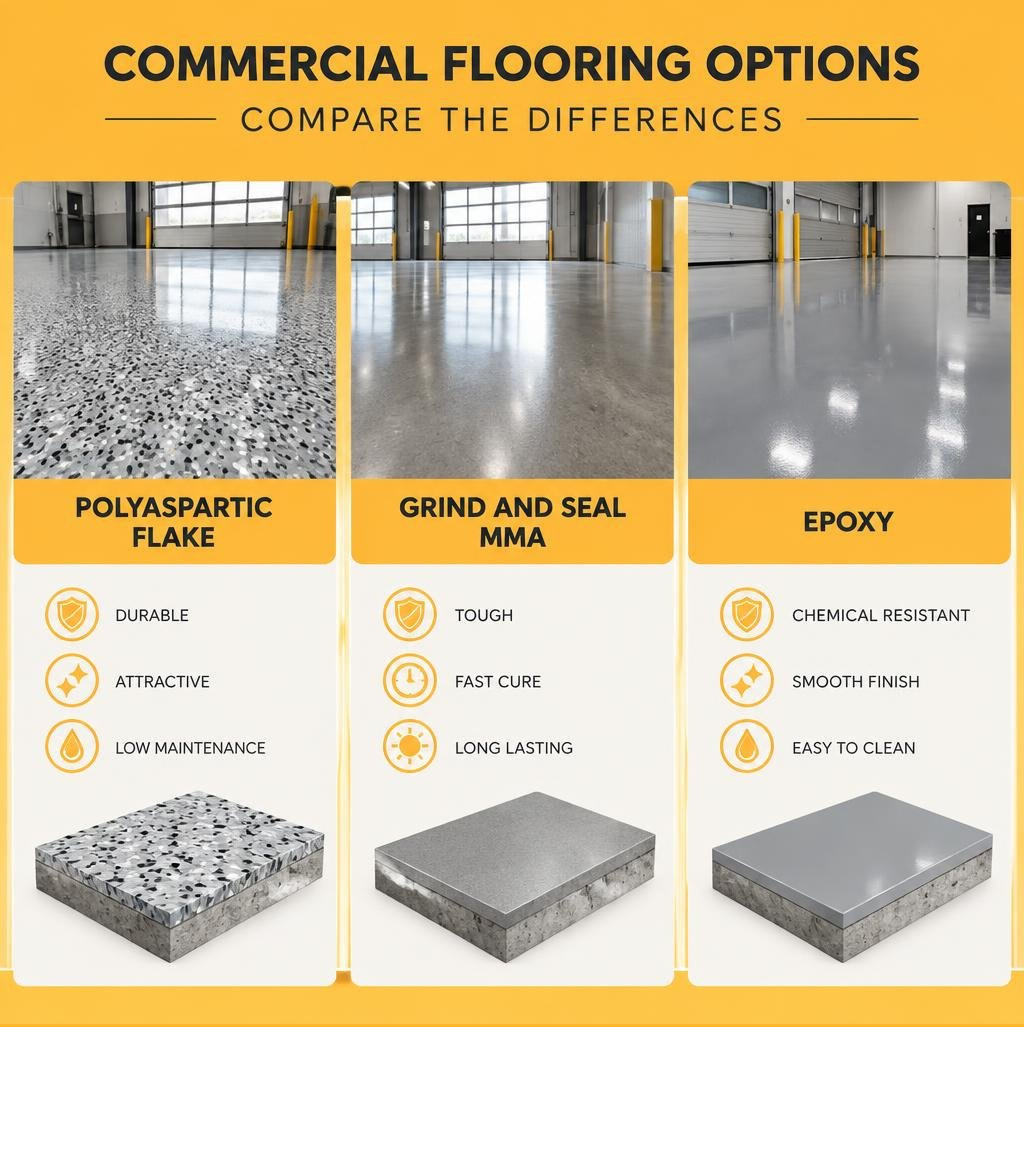
At Checkmate Coatings, we diamond-grind every job. Our commercial options include a decorative flake coating with a polyurea base and polyaspartic clear topcoat, a smooth Grind and Seal MMA system for large or industrial spaces, and epoxy systems for specific commercial uses. The right choice depends on the slab, the work done in the space, and how much downtime you can allow. For facilities evaluating concrete polishing in Jacksonville, the same slab assessment applies whether the final surface is polished concrete or a coated system.
The Complete Guide to Jacksonville Concrete Resurfacing and Floor Coatings
Every successful commercial floor transformation begins beneath the surface. Concrete is naturally porous, meaning unsealed and poorly prepared slabs absorb oils, chemicals, and ambient moisture. To guarantee that a new surface bonds permanently, we utilize mechanical diamond-grind surface preparation on every single project.
Diamond grinding opens the concrete pores and creates an ideal mechanical profile. Without this critical step, topical finishes simply sit on top of loose dust and weak surface cream, leading to premature delamination. Proper preparation delivers outstanding high-traffic durability, easier long-term maintenance, and a clean commercial appeal that leaves a lasting impression on clients and staff.
To understand how moisture impacts concrete slabs and coating success, industry standards such as 302.2-22: Concrete Slabs that Receive Moisture-Sensitive Flooring Materials—Guide outline the vital relationship between slab moisture levels and floor longevity.
| System Type | Primary Resin Technology | Best Commercial Application | Maintenance Profile | Key Advantage |
|---|---|---|---|---|
| Polyaspartic Flake System | Polyurea base coat with polyaspartic topcoat | Retail, showrooms, commercial garages, public corridors | Routine neutral-pH sweeping and mopping | 1-day installation, superior UV stability, rapid return to service |
| Grind and Seal MMA System | Methyl Methacrylate (MMA) resin | Large warehouses, industrial distribution, rapid-turnaround facilities | Dust mopping, occasional auto-scrubbing | Rapid chemical curing, high impact resistance, smooth aesthetic |
| Epoxy Flake Flooring System | Multi-component commercial epoxy resin | Commercial interiors, service areas, light industrial spaces | Standard commercial floor washing | High build thickness, budget-conscious installation |
| Three-Coat Epoxy System | Industrial-grade epoxy base, intermediate, and top layers | Heavy manufacturing, chemical processing, demanding industrial zones | Heavy-duty industrial cleaning routines | Maximum build thickness for extreme physical demands |
Polyaspartic Flake vs. Grind and Seal MMA Systems
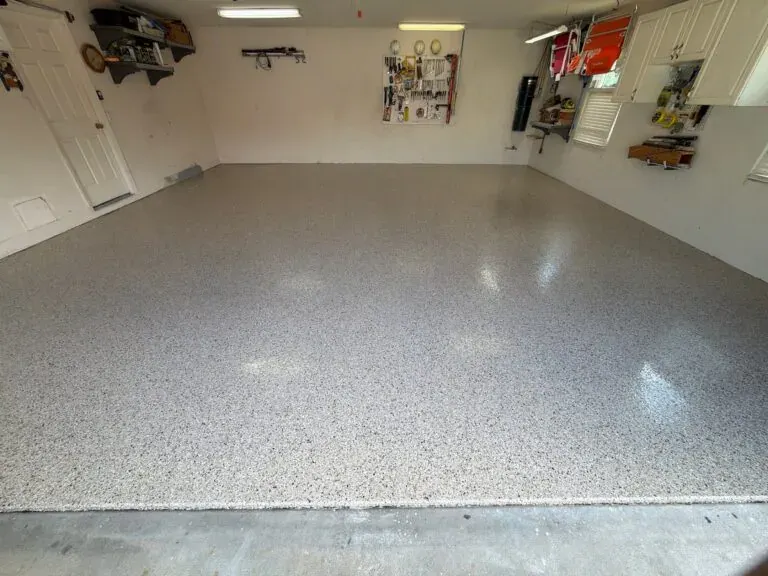
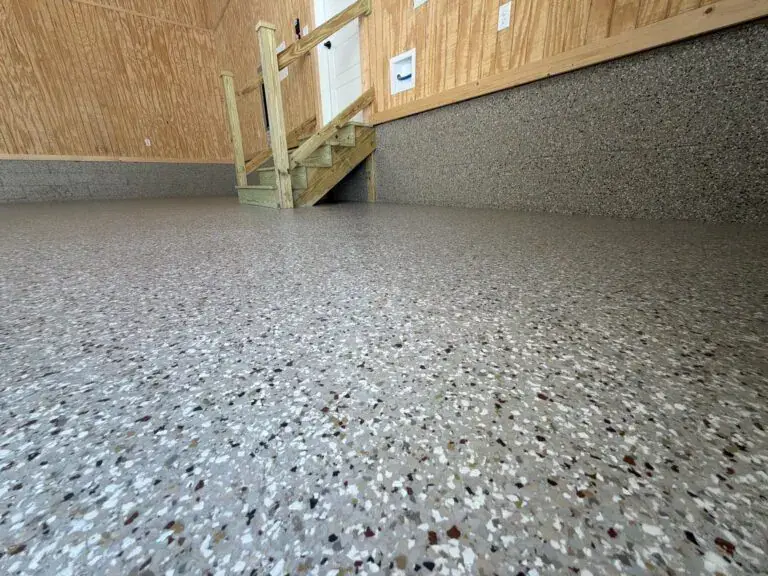
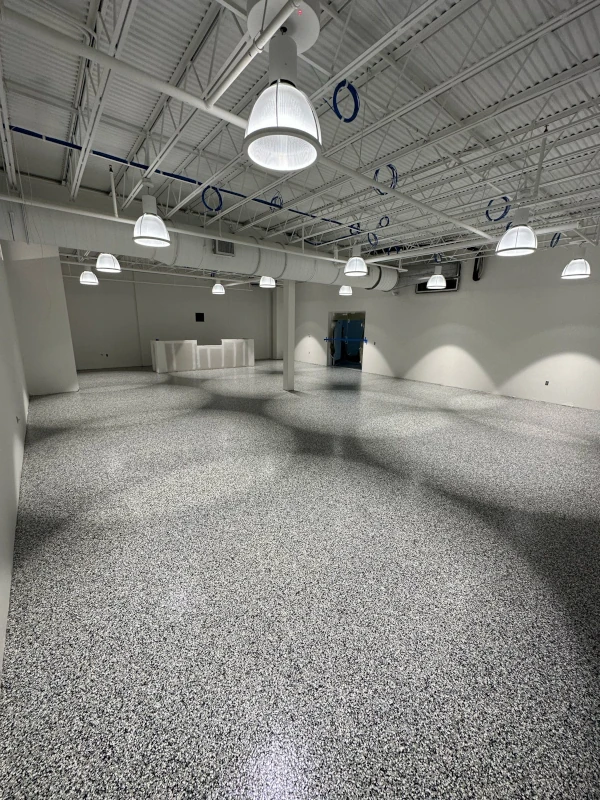
When evaluating performance, our Polyaspartic Flake Floor Coating stands out as our most popular option for concrete coating. It leverages an ultra-flexible polyurea base coat that penetrates deep into the concrete capillaries, finished with a full-broadcast decorative flake finish, with flakes visible across the coated surface, and a resilient polyaspartic clear topcoat. Thanks to its rapid curing technology, it offers true one-day installation with minimal business disruption.
In contrast, our Grind and Seal MMA System (Methyl Methacrylate) delivers a modern, smooth-finish system ideal for large or industrial spaces. MMA chemistries cure through a rapid chemical reaction rather than moisture evaporation, creating a monolithic, non-porous barrier that excels in heavy production zones where seamless aesthetics and chemical resistance are paramount.
Decorative Flake vs. High-Performance Coating Systems
Choosing between our full-broadcast decorative flake finish and our smooth-finish Grind and Seal MMA System for large or industrial spaces comes down to your operational environment. Decorative flake finishes introduce multi-tonal color blends that naturally camouflage daily foot traffic, fine dust, and minor surface scratches. They provide slight inherent texture, boosting slip resistance in customer-facing retail environments, commercial restrooms, and service areas.
For large or industrial spaces, we also offer the Grind and Seal MMA System, a modern, smooth-finish commercial option. We assess chemical exposure, washdown needs, and wheeled traffic when recommending a system for the space.
Assessing Costs and Timelines for Commercial Floor Coating Projects
Commercial flooring investments must always be evaluated over the entire life of the floor rather than short-term upfront sticker prices. Low-quality coating approaches that skip proper surface preparation may seem budget-friendly initially, but their hidden lifecycle costs accumulate rapidly.
Poorly prepared or under-engineered floor finishes are notorious for hot-tire pickup, peeling under minimal shear stress, UV yellowing, and requiring complete recoating every one to two years. When you factor in recurring facility shutdowns, lost operational revenue, and repeated labor expenses, cutting corners upfront becomes the most expensive choice a business can make. Investing in professional diamond grinding and advanced polyurea/polyaspartic chemistry delivers decades of uninterrupted performance.
Cost Factors for Commercial Floor Coating in Jacksonville
Several technical variables influence the total investment for commercial flooring projects:
- Total Project Square Footage: Larger continuous spaces often achieve greater efficiency of scale during the mechanical grinding phase.
- Slab Condition and Structural Repairs: Slabs requiring extensive crack filling, spall repair, joint rebuilding, or leveling compound require additional preparation labor.
- Surface Contamination: Concrete exposed to heavy automotive fluids, grease, or previous failed coatings requires specialized decontamination and aggressive diamond tooling.
- Site Accessibility and Scheduling: Working around active production schedules or overnight shifts impacts crew staging and project logistics.
Step-by-Step Process for Jacksonville Commercial Coating Projects
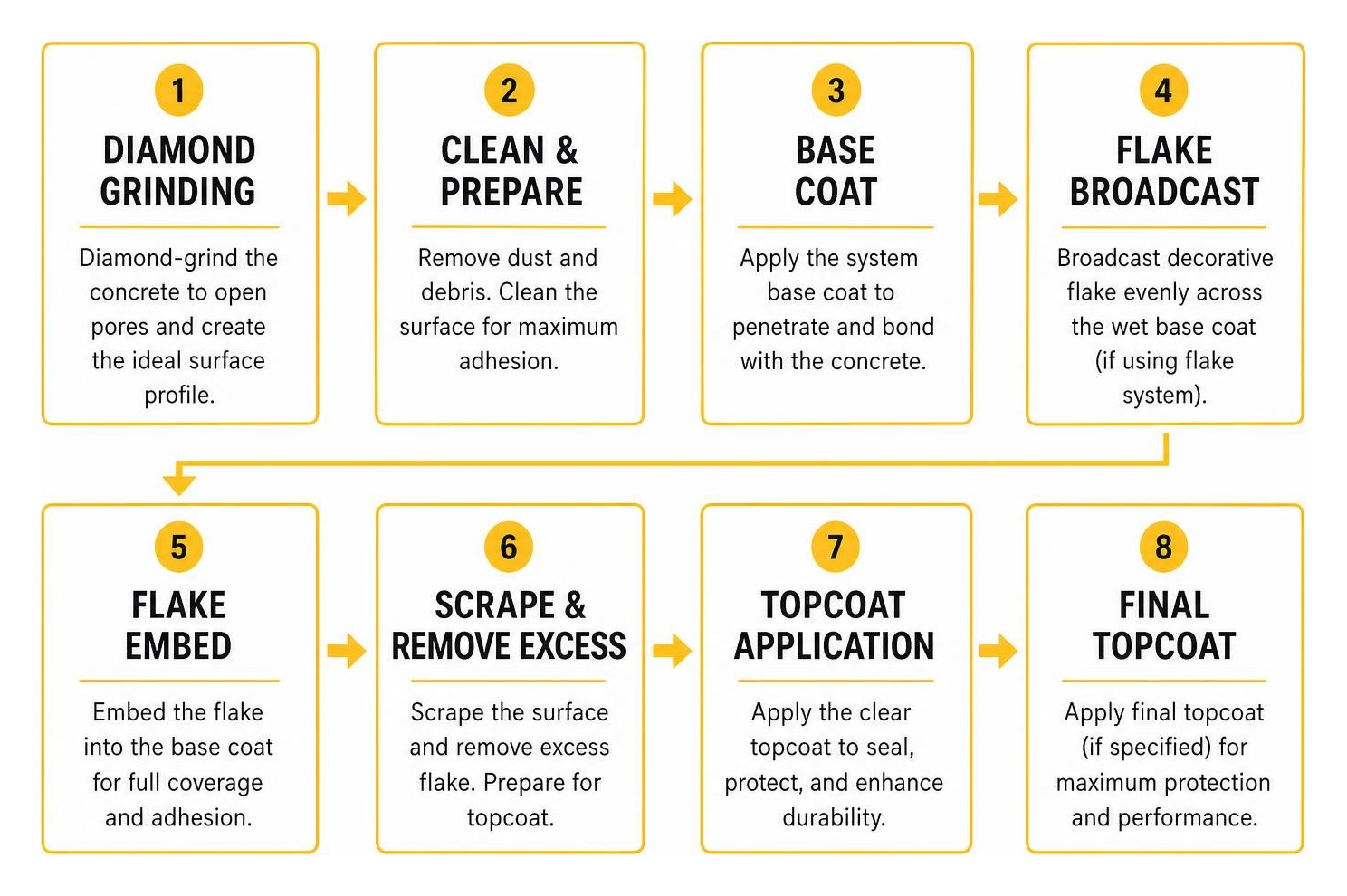
A professional coating installation demands precision at every stage:
- Moisture Testing and Slab Inspection: Evaluating relative humidity levels and surface hardness.
- Mechanical Diamond Grinding: Diamond tooling profiles the concrete surface while removing existing sealers, adhesives, or contaminants.
- Substrate Repair: Filling dormant cracks, expansion joint rebuilds, and patching divots with high-strength repair compounds.
- Base Coat Application: Applying an industrial polyurea or specialized primer that chemically anchors into the opened pores.
- Flake Broadcast or Intermediate Layer: Broadcasting decorative vinyl flakes to full rejection or applying intermediate build coats.
- Reclamation and Scraping: Vacuuming excess flake and scraping the surface flat for a uniform, comfortable texture.
- High-Performance Clear Topcoat: Applying a polyaspartic clear topcoat to seal the system against abrasion, UV rays, and harsh chemicals.
High-Performance Commercial Coating Options
We offer specialized flooring formulations engineered for commercial facilities facing heavy machinery, forklift traffic, chemical exposure, and constant foot traffic.
Polyaspartic Flake Floor Coating Systems
Our polyaspartic flake system combines a deeply penetrating polyurea base coat with a resilient clear polyaspartic topcoat. It provides complete UV stability—meaning it will never amber or discolor under bright retail lighting or near large commercial glass bay doors. Furthermore, it cures rapidly, allowing facilities to return to light foot traffic in 24–36 hours and resume full vehicle operations after just 48 hours minimum.

Industrial Epoxy and MMA Formulations
We also install epoxy and MMA formulations for commercial facilities:
- Epoxy Flake Flooring System: A durable and cost-effective flooring system ideal for commercial interiors, garages, service areas, and light industrial environments.
- Three-Coat Epoxy Flooring System: A high-build, industrial-grade flooring system engineered for maximum durability and long-term performance in demanding commercial and industrial environments facing extreme physical abrasion.
- Grind and Seal MMA System: A modern, smooth-finish system ideal for large or industrial spaces requiring ultra-fast chemical curing and clean monolithic aesthetics.
Protecting and Maintaining Coated Concrete in Northeast Florida’s Climate
Operating a commercial facility in Northeast Florida introduces unique environmental challenges. Jacksonville’s subtropical heat, elevated humidity, salt-laden coastal air, and fluctuating water tables place severe demands on concrete substrates.
Moisture Vapor Management and Surface Preparation
High groundwater levels throughout Northeast Florida create substantial moisture vapor transmission through unsealed commercial slabs. If a low-quality topical sealer or poorly prepped epoxy is applied over damp concrete, rising hydrostatic pressure will blow the coating off the substrate in sheets.
Mechanical diamond grinding mechanically cleans and opens the concrete matrix, ensuring our polyurea base coat creates a permanent mechanical and chemical fuse. By penetrating deeply into the open pores, the coating resists moisture vapor pressure far better than rigid paints or standard sealers.
Routine Maintenance
Maintaining coated commercial concrete is straightforward, requiring no waxing, stripping, or aggressive buffing:
- Daily Maintenance:
- Dry dust-mop open corridors to remove loose sand, abrasive grit, and surface dirt.
- Spot-clean chemical or oil spills immediately using a clean microfiber pad.
- Weekly/Monthly Maintenance:
- Wet-mop or auto-scrub using clean water and a mild, neutral-pH commercial floor cleaner.
- Avoid acidic cleaners, bleach, or citrus-based solvents that can dull topical gloss over extended periods.
- Inspect high-traffic transition thresholds and entryway mats to prevent coarse outside debris from grinding into the surface.
Frequently Asked Questions about Commercial Concrete Coating and Resurfacing
Can existing or damaged concrete slabs be coated?
Yes. Concrete floor coatings can be applied to existing concrete surfaces, provided the slab is structurally sound. During our diamond-grinding preparation, our crews repair cracks, patch spalled areas, and fill divots using industrial mending polymers before applying the coating system.
How does humidity affect coated concrete in Jacksonville?
Jacksonville’s intense humidity and frequent rainfall can ruin unsealed slabs or improperly applied paints, leading to trapped moisture, blistering, and microbial growth. Professional diamond grinding paired with high-performance polyurea and polyaspartic coatings eliminates these issues by creating a seamless, non-porous, moisture-resistant barrier that will not bubble or peel.
How do cure times compare between epoxy and polyaspartic coatings?
Traditional epoxy systems often require 3 to 7 days before returning a facility to full commercial service, creating costly business interruptions. In contrast, our polyaspartic system allows for light foot traffic within 24–36 hours and commercial vehicle or forklift traffic after a 48-hour minimum cure time.
Conclusion
Upgrading your commercial concrete surface delivers long-term durability, enhances facility safety, minimizes routine maintenance costs, and substantially improves property value. At Checkmate Coatings, our work is handled exclusively by in-house W2 installation crews—we never use subcontractors—and every residential project is backed by our Stress-Free Warranty.
Whether you need a rapid-turnaround flake finish or a heavy-duty industrial floor, connect with Checkmate Coatings Jacksonville today to schedule your commercial floor consultation and professional slab evaluation.