
Concrete Driveway Coatings: Is Your Surface a Good Candidate?
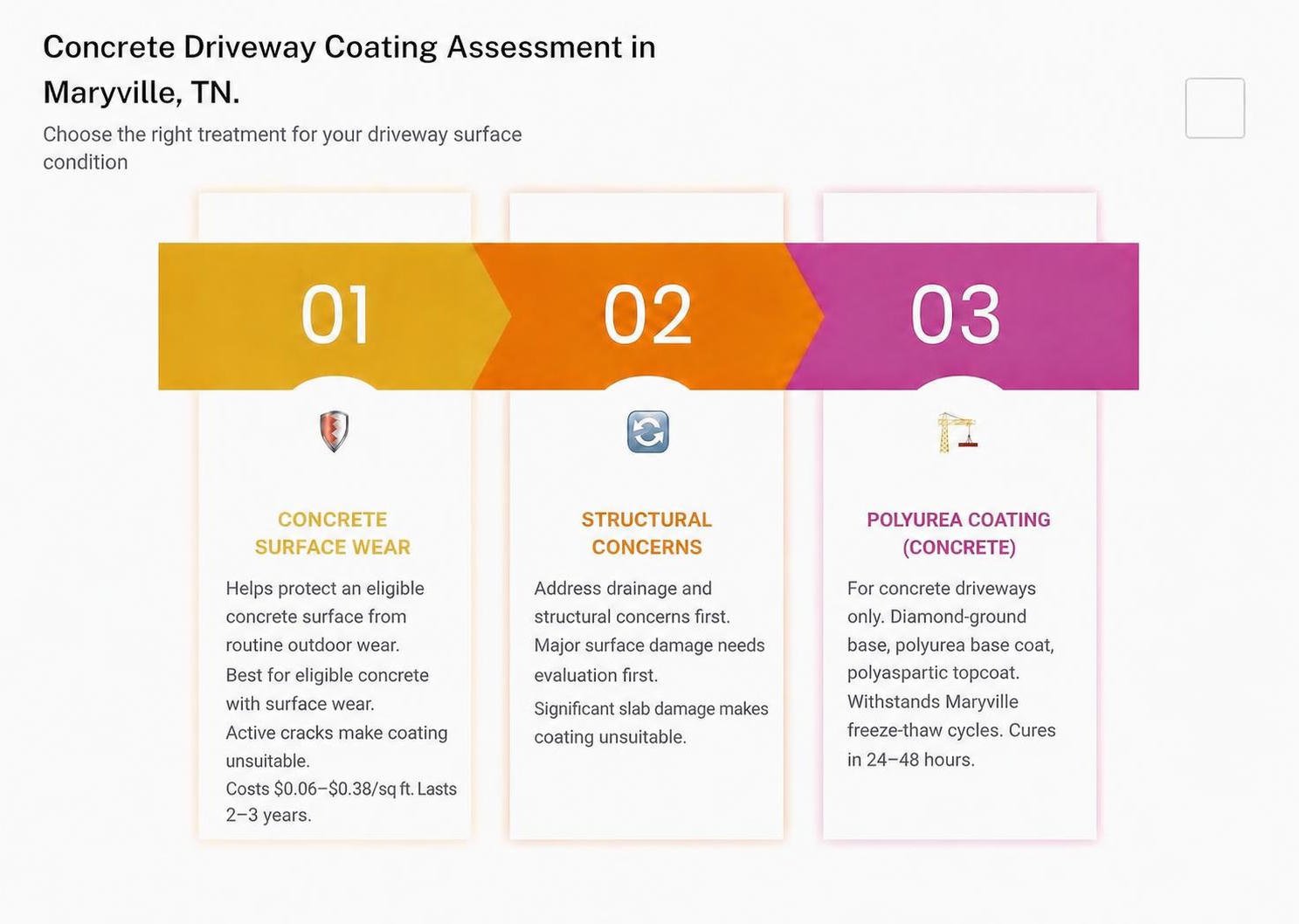
For a concrete driveway, start with the condition of the slab beneath your feet. Surface wear, pitting (small surface holes), and minor spalling (surface chipping or flaking) may be good candidates for a professional coating after drainage concerns and active structural issues have been addressed.
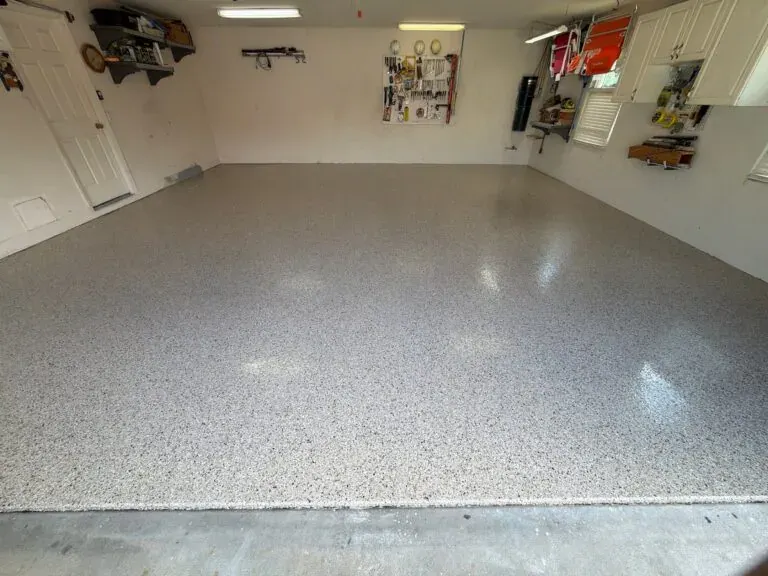
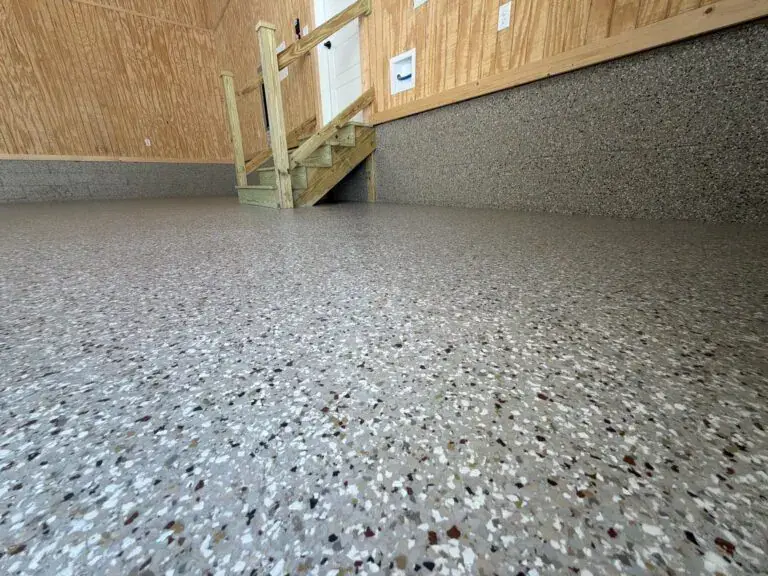
At Checkmate Coatings, we install a polyurea base coat—a flexible resin layer that bonds to concrete—and a polyaspartic clear topcoat, a protective resin finish. Between these layers, decorative flakes cover the entire surface, a finish called full-broadcast flake. Rain and temperature changes make it especially important to check cracks and drainage before choosing any treatment.
Understanding Concrete Driveway Coatings
Concrete driveways can develop surface wear from moisture, de-icing salts, hot tires, and seasonal temperature changes. A professional coating is designed to protect an eligible concrete surface, not to disguise major structural problems.
We begin by grinding the concrete with diamond tools to clean it and create a rough surface texture that helps the coating bond. A polyurea base coat, decorative flakes, and a polyaspartic clear topcoat create a durable finished surface for qualified driveways. For general background on protecting exterior pavement surfaces, see the University of Kentucky’s pavement-preservation overview.
A site evaluation helps determine whether a concrete coating is the right investment for your driveway.
What a Concrete Driveway Coating Can and Can’t Do
A professionally installed concrete coating can help protect an eligible driveway surface from routine wear, moisture exposure, de-icing salts, and hot tires while providing a finished appearance with visible decorative flakes.
However, a concrete coating cannot:
- Correct a failing base or major structural movement.
- Eliminate drainage problems or standing water.
- Restore severely deteriorated concrete without appropriate repairs.
- Substitute for the required preparation of the concrete beneath the coating.
For eligible concrete surfaces, our driveway coating options provide durable surface protection.
When a Concrete Coating May Be a Good Fit
A concrete coating is not a solution for a slab with severe movement, deep settlement, or drainage issues. Those underlying concerns should be evaluated and corrected before any decorative coating system is installed.
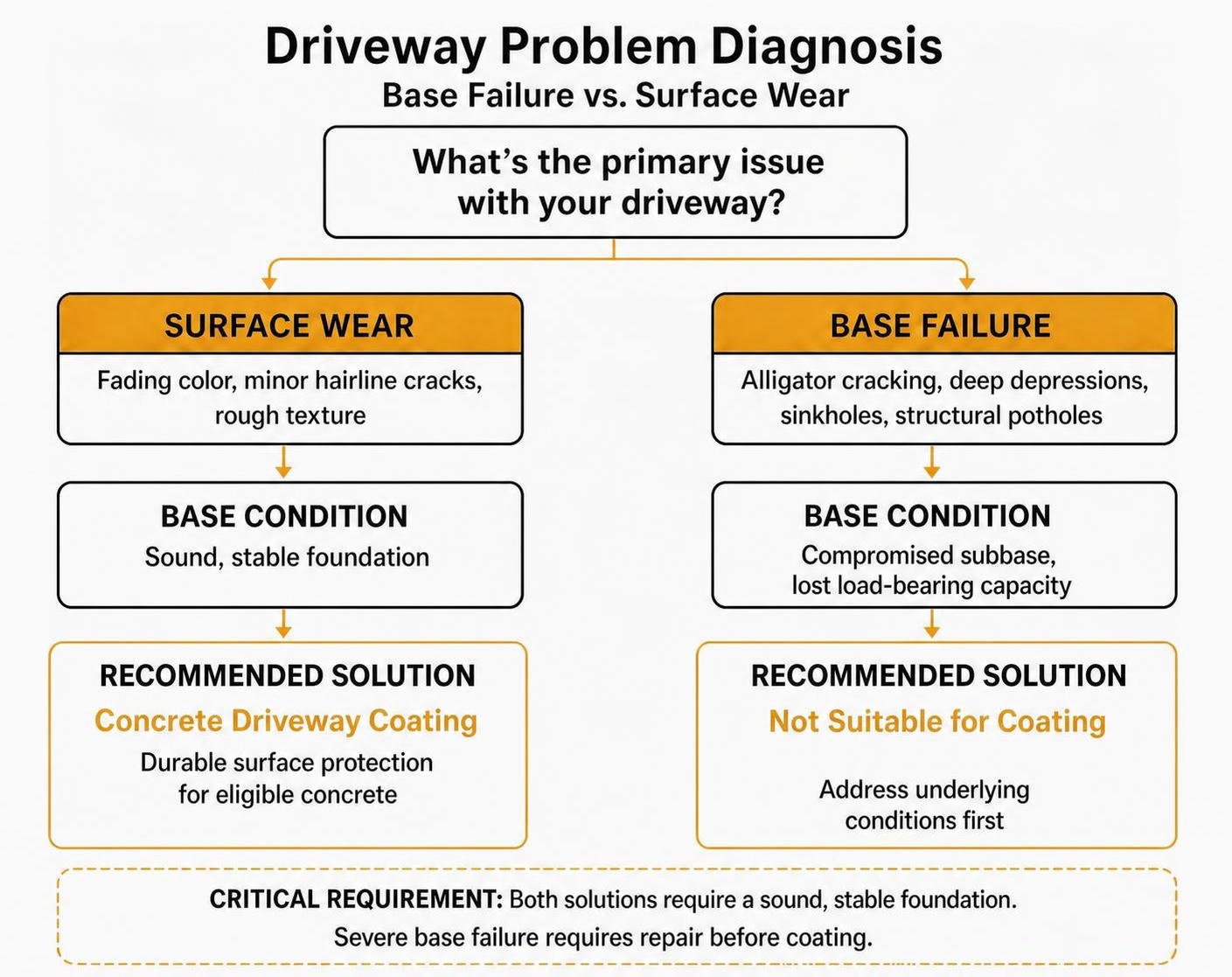
Concrete driveways can develop spalling, surface pitting, and dusting (a loose, powdery concrete surface). After the slab is determined to be a suitable candidate, a professional concrete driveway coating can help protect the surface from moisture and salt.
Concrete Driveway Coating Value, Lifespan, and Maintenance
When evaluating a concrete driveway coating, consider its long-term value over the life of the surface rather than focusing only on the initial investment.
A professionally installed coating system is tailored to the driveway’s condition, required repairs, preparation needs, and finish selection. Proper diamond-grind preparation and durable materials help protect an eligible concrete surface from routine outdoor wear.
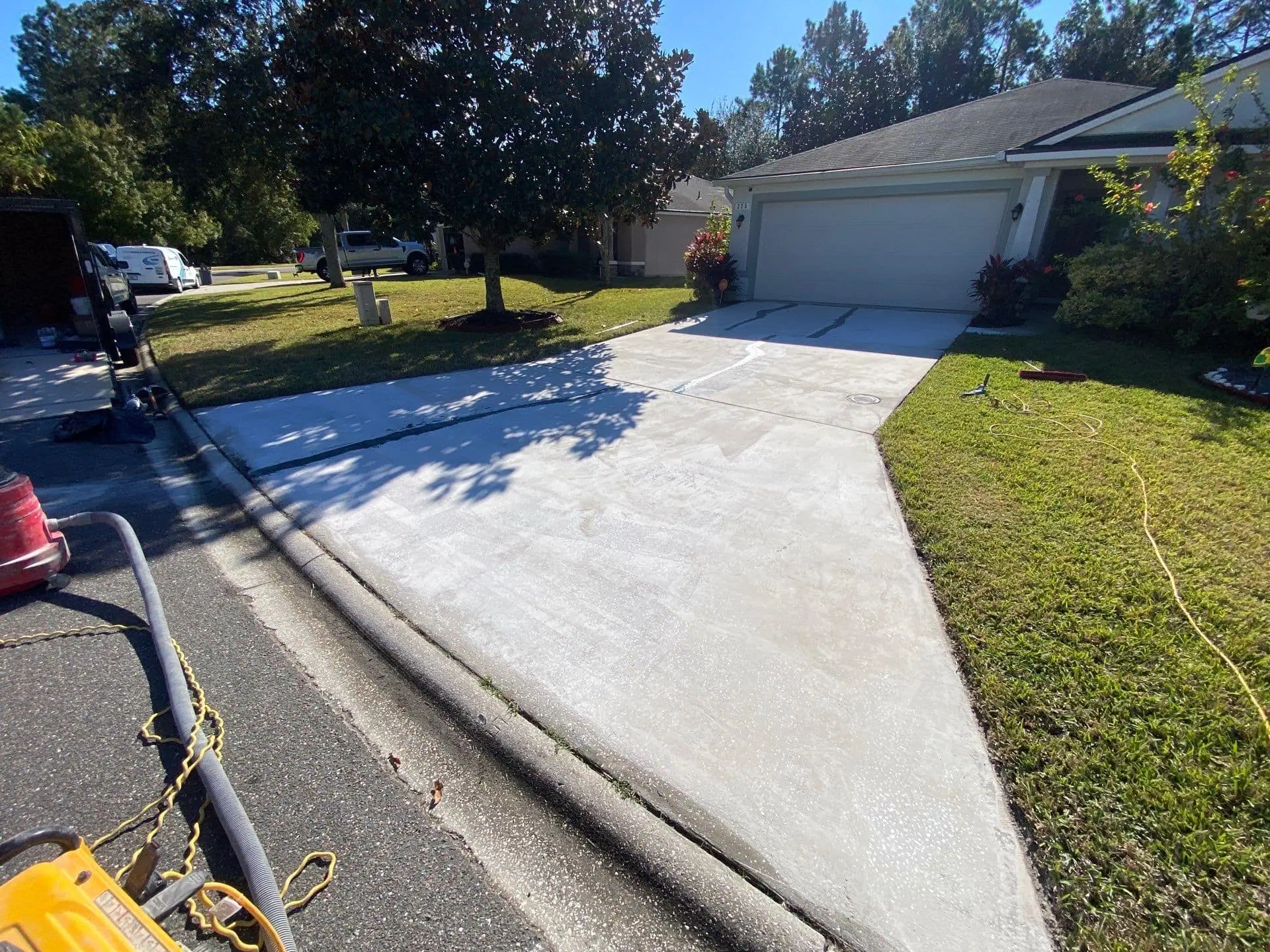
Why Weather Makes Concrete Surface Protection Important
Weather and ground conditions can be tough on concrete driveways. Common challenges include:
- Heavy Clay Soils: Local red clay can expand when saturated and shrink during dry spells, placing stress on concrete slabs.
- Repeated Freeze-Thaw Cycles: Moisture that enters small cracks can freeze and widen them over time.
- Summer Ultraviolet (UV) Exposure: Intense sunlight can weather an unprotected concrete surface.
- De-icing Chemicals and Road Salts: Salt can be harsh on porous concrete during winter.
Addressing cracks, drainage, and surface preparation before coating helps protect the driveway from these seasonal conditions.
When Concrete Driveway Wear Signals a Coating Decision
When a concrete driveway has spalling, pitting, or surface wear, our polyurea and polyaspartic flake system offers a durable coating solution after underlying drainage or base concerns have been addressed.
When to Consider a Concrete Driveway Coating
Concrete coatings are not a repair for a failing base or major drainage problem. After those issues are addressed, diamond-grind preparation and a full-broadcast flake finish can protect an eligible concrete driveway from routine surface wear, moisture, de-icing salts, and hot tires.
Why Our Polyurea and Polyaspartic System Is Built for Outdoor Driveways
For an outdoor driveway, the coating choice must stand up to sun, moisture, and tire traffic. At Checkmate Coatings, we do not install acrylic sealers (thin protective surface coatings), do-it-yourself (DIY) roll-on kits, or 1-part floor paints (paints used without mixing in a separate hardener) because we prioritize fast curing (hardening), UV stability, and resistance to moisture and hot-tire wear.
We avoid systems prone to slow curing, hot-tire pickup (coating pulled loose by warm tires), yellowing in sunlight, peeling, or frequent recoating. These are performance risks we consider when choosing a coating, not guaranteed outcomes for every alternative product.
We do not use epoxy, a resin coating mixed with a hardener, for residential outdoor concrete, although it is sometimes specified for indoor commercial environments; outdoor driveways need superior flexibility and UV stability.
At Checkmate Coatings, we install a dual-layer system engineered for lasting outdoor durability:
- Mechanical Diamond Grinding: We never use acid etching—using acid to roughen the concrete surface. Every project starts by grinding the concrete with diamond tooling to create a rough surface with exposed pores that helps the coating bond.
- Flexible Polyurea Base Coat: Our pure polyurea base penetrates the concrete pores and remains flexible enough to withstand freeze-thaw shifts without cracking.
- Full-Broadcast Decorative Flakes: We broadcast decorative vinyl flakes across the wet base coat until complete coverage is achieved, providing texture and hiding minor surface imperfections. All of our color blends can be installed across any concrete surface.
- Non-Yellowing Polyaspartic Clear Topcoat: We seal the system with a clear polyaspartic topcoat that is designed for UV resistance to help prevent yellowing and help resist damage from motor oil, de-icing salts, and hot tires.
Because we handle everything with in-house W2 installation crews—our own payroll employees, never subcontractors—we can complete most residential installations in as little as one day and back our concrete coatings with our worry-free residential warranty.
Choosing a Licensed and Insured Coating Contractor
When upgrading a concrete driveway with an advanced flake system, choosing the right local contractor protects your investment.
When interviewing contractors, verify the following:
- W2 Employees vs. Subcontractors: Ask who will install the coating and how the company trains its crew and takes responsibility for installation quality.
- Proper Licensing & Full Insurance: Ensure the business holds active general liability insurance and workers’ compensation coverage to protect you from liability.
- Surface Preparation Standards: Ask specifically about prep methods. We diamond-grind the concrete on every job to prepare it for coating adhesion.
- Clear Written Proposals: Reliable quotes detail the exact materials, prep steps, cure times (how long the coating must harden before use), and warranty terms without surprise fees.
Frequently Asked Questions About Driveway Maintenance
How long does a Checkmate concrete driveway coating take to cure?
Our polyurea and polyaspartic coatings cure rapidly, but installation completion does not mean the driveway is ready for use. Follow the return-to-use instructions we provide for foot and vehicle traffic. If you have questions about specific installation windows, review our common customer questions for full timeline guidelines.
Can a concrete coating fix existing cracks and potholes?
No. A concrete coating cannot correct underlying slab conditions. Active cracks, major spalling, drainage concerns, and other problems with the underlying concrete must be properly evaluated and addressed before a coating is installed.
How should homeowners maintain a coated concrete driveway?
Follow the care guidance provided after installation and address spills or debris promptly. Our professional polyurea and polyaspartic flake system is designed to provide durable protection for eligible concrete driveways without relying on frequent reapplication.
Conclusion
Protecting your concrete driveway from changing seasons starts with choosing a system that fits the condition of the slab. For an eligible surface, a durable professional coating can resist routine outdoor wear without peeling, yellowing, or lifting under hot tires.
If you are ready to upgrade your concrete with a long-lasting, full-broadcast flake finish installed by in-house professionals in as little as one day, schedule a driveway consultation with our local team at Checkmate Coatings today.