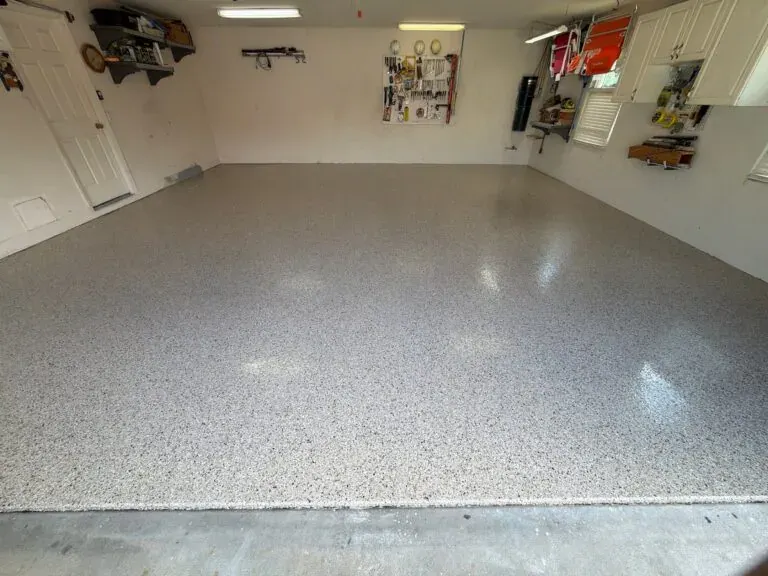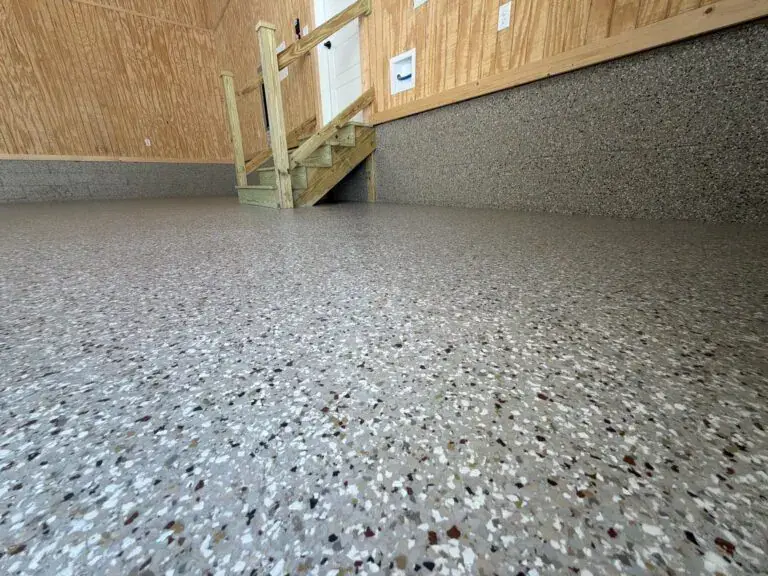

Why a Peeling Garage Floor Needs More Than a New Coat
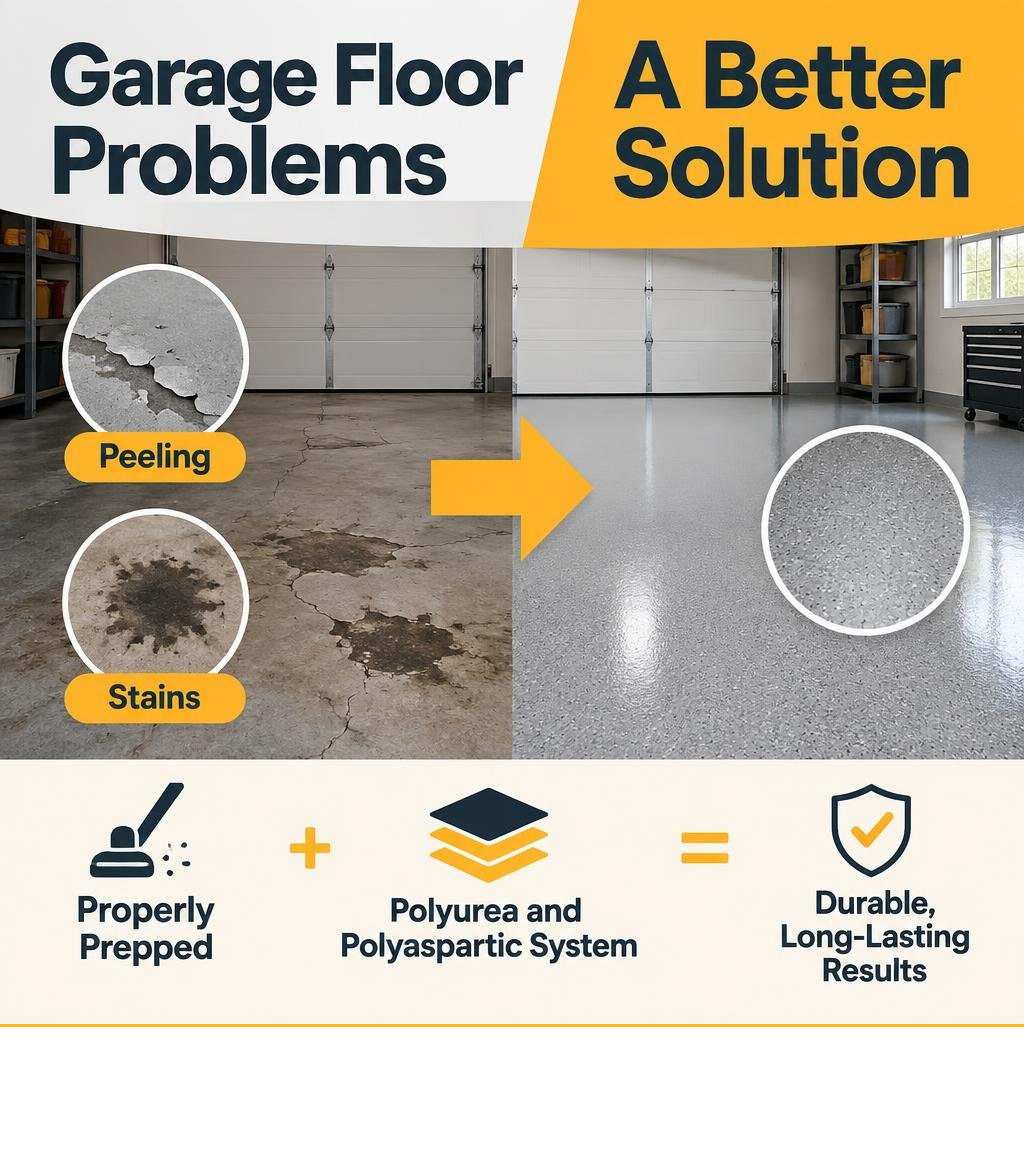
Polyaspartic floor coating for garages is a strong choice when you want a finished floor without repeating the peeling problem. The key is proper prep: a new coating needs sound concrete to bond to, not a loose finish underneath.
At Checkmate Coatings, we diamond-grind the concrete, apply a polyurea base coat and decorative flakes, then seal the floor with a UV-resistant polyaspartic clear topcoat. The system helps resist everyday stains and wear, and we can install it in as little as one day. We use the same approach on other concrete surfaces, including patios and driveways.
Why Polyaspartic Floor Coating for Garages Protects Concrete
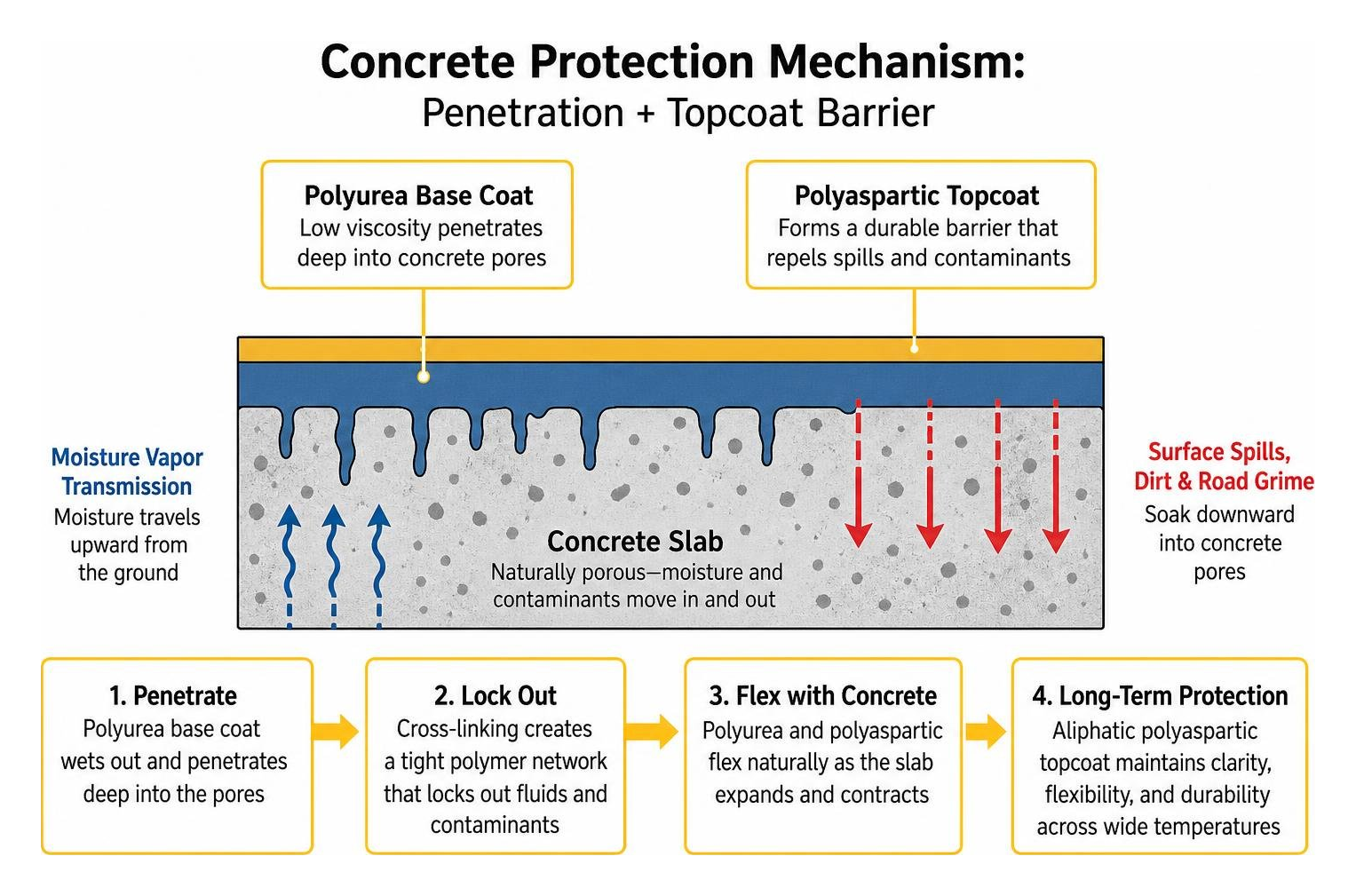
Standard concrete is naturally porous, functioning much like a dense, rigid sponge. Moisture travels upward from the ground through moisture vapor transmission, while surface spills, dirt, and road grime soak downward into the pores. When an inferior coating or store-bought paint is applied over an unprepared surface, the bond fails quickly. Trapped moisture pushes upward, hot tires soften the resin, and the finish begins to flake away in large sheets.
Restoring a failing floor requires a chemistry engineered specifically to handle the physical and thermal dynamics of residential garages.
The Science Behind Polyaspartic Floor Coating for Garages
Polyaspartic technology is an advanced aliphatic polyurea system. The term “aliphatic” refers to a specific chemical structure that provides outstanding stability against ultraviolet (UV) radiation. Unlike aromatic polymers that break down, yellow, or become brittle under direct sunlight, polyaspartic clear coats retain optical clarity and flexibility indefinitely.
The magic of our multi-layer system lies in how the polyurea base and polyaspartic topcoat behave at a molecular level:
- Deep Concrete Bond: Our polyurea base coat features low viscosity during initial application, wetting out the concrete pores and penetrating deep into the slab rather than merely sitting on top.
- Rapid Cross-Linking: The formulation cures through an advanced cross-linking reaction, creating a tight polymer network that locks out fluids and contaminants.
- Thermal Expansion Flexibility: Concrete slabs expand and contract as temperatures fluctuate throughout the year. Polyurea and polyaspartic coatings flex naturally with the slab instead of cracking under thermal stress.
- Climate Resilience: Whether facing high humidity and heat in Northeast Florida, Central Florida, and Austin, or freezing winter cycles in East Tennessee, the aliphatic chemistry maintains its strength and elasticity across wide temperature swings.
Durability, Hot-Tire Pickup, and Chemical-Resistance Considerations
One of the most frustrating garage floor failures is hot-tire pickup. When a vehicle drives on hot asphalt or concrete, the tires heat up significantly. As the car parks on a standard garage finish, the cooling rubber contracts, grabbing the coating and peeling it clean off the concrete.
Our heavy-duty garage floors and coatings eliminate this issue through superior chemical cross-linking and industrial adhesion.
| Performance Factor | Bare Uncoated Concrete | Standard Floor Paint / DIY Kit | Checkmate Polyurea / Polyaspartic System |
|---|---|---|---|
| Hot-Tire Pickup Resistance | N/A (concrete stains directly) | High risk of delamination and peeling | Completely impervious to hot-tire pickup |
| Motor Oil & Fluid Stains | Absorbs quickly, permanently discoloring | Can soften and blister paint films | Repels oils, gas, and fluids for easy wipe-down |
| Road Salt & De-icer Resistance | Causes pitting, scaling, and spalling | Breaks down quickly, letting salt reach concrete | Chemically non-reactive; shields the slab |
| Impact & Abrasion Strength | Chipping and surface dusting under impact | Scratches, chips, and scuffs easily | Resilient, flexible layers absorb impact forces |
The Multi-Layer System: Polyurea Base Coat and Polyaspartic Topcoat
A single coat of material cannot handle every challenge garage concrete faces. That is why we engineer our installations as an integrated multi-layer system.

The journey to the best floor coatings – say goodbye to stained and dusty concrete starts with a dedicated moisture-mitigating polyurea base coat. Because the base coat stays open long enough to soak deep into the concrete’s open pore structure, it creates an unbreakable mechanical root system.
While certain commercial projects specify an epoxy flake flooring system or a three-coat industrial epoxy build for interior warehouse environments, residential settings call for a different approach. Standard 1-part floor paints and basic hardware-store sealers present major hurdles for homeowners: extended cure times, susceptibility to hot-tire peeling, yellowing under UV exposure, and frequent re-coating cycles.
Our polyurea base and polyaspartic topcoat system overcomes every single one of these common failure points, giving homeowners lasting peace of mind. Industry resources from organizations like the International Concrete Repair Institute highlight how advanced polymer chemistry and proper substrate preparation prevent coating delamination and ensure long-term performance.
Broadcast Flake Blends and Aesthetics
Once the polyurea base coat is laid down, our technicians perform a full-rejection broadcast of decorative vinyl flakes across the entire floor. Broadcasting to 100% rejection means we saturate the base coat until no wet resin can hold another chip.
- Slip Resistance: The vinyl chips create an evenly textured surface profile that offers reliable traction, even when wet.
- Concrete Masking: Real-world concrete has minor pits, divots, and patched cracks. The rich color patterns of a full-flake broadcast camouflage surface imperfections effortlessly.
- Custom Styling: Homeowners can choose from a broad variety of coating colors to complement vehicle finishes, cabinetry, or exterior home palettes.
Versatility Across All Concrete Surfaces
Our high-performance coatings are not confined to the garage. Because our polyurea and polyaspartic system provides total UV stability and weather resilience, we install it on virtually any exterior or interior concrete substrate.

You will find our multi-layer flake systems protecting:
- Outdoor patios and lanais
- Pool decks exposed to sun, chlorine, and standing water
- Residential driveways (offering a low-maintenance, seamless alternative to high-upkeep stone epoxy driveways)
- Commercial spaces, retail floors, aircraft hangars, and light industrial service bays
To see how these spaces transform, explore our dedicated solutions for garage floors.
The Step-by-Step Installation and Cure Timeline
Applying a high-performance coating requires precision craftsmanship and specialized equipment. We never cut corners with acid etching or quick chemical washes, which often trap moisture and leave unprofiled concrete behind.
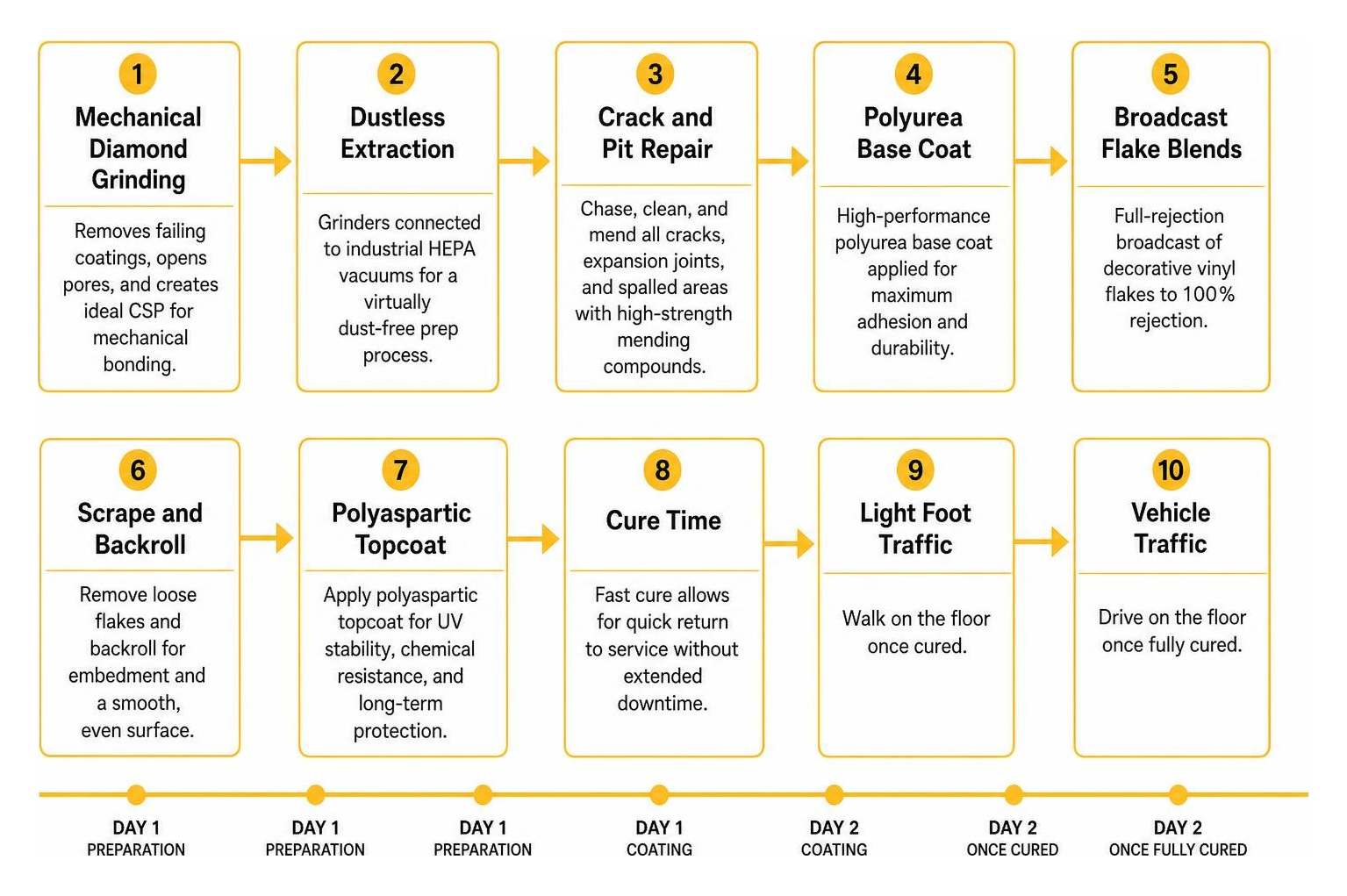
Professional Installation of Polyaspartic Floor Coating for Garages
- Mechanical Diamond Grinding: Our in-house W2 installation crews run heavy planetary diamond grinders over the entire slab. This removes previous failing paints, opens up the concrete pores, and creates a Concrete Surface Profile (CSP) ideal for mechanical bonding.
- Dustless Extraction: Grinders are connected to industrial HEPA vacuums, ensuring a virtually dust-free prep process inside your home.
- Crack and Pit Repair: We chase, clean, and mend all cracks, expansion control joints, and spalled areas with high-strength mending compounds.
- Polyurea Base Coat Application: We mix and roll the pure polyurea base coat evenly across the floor.
- Full Flake Rejection Broadcast: We broadcast your chosen flake blend into the wet base coat until complete saturation is achieved.
- Scraping and Vacuuming: Once cured, excess flakes are recovered, and the surface is scraped flat to create an even, comfortable texture underfoot.
- Polyaspartic Clear Topcoat: We apply a heavy coat of clear, UV-stable polyaspartic resin, encapsulating the flakes in a durable, stain-proof protective seal.
Rapid Cure Times and Return-to-Service Expectations
Traditional floor paints and standard commercial epoxy systems often require days or even a full week before you can walk or drive on them. Our rapid-curing chemistry shortens project schedules significantly:
- Installation Time: Completed in as little as one day.
- Light Foot Traffic: Safe to walk on within 24 to 36 hours after topcoat application.
- Full Vehicle Parking: Ready for your vehicles, heavy toolboxes, and equipment after 48 hours minimum.
Take a look at real-world transformations in the gallery of our work.
Long-Term Maintenance and Cost Comparison
When evaluating a garage floor upgrade, looking strictly at the initial price of a DIY kit from a home improvement store ignores the true cost over the life of your floor. Thin DIY paints and basic sealers often peel within twelve to twenty-four months, requiring costly stripping, re-grinding, and complete reapplication.
A professionally installed polyurea and polyaspartic system is an investment in permanent durability. You eliminate the endless cycle of repainting, patching, and cleaning stubborn stains out of bare concrete pores.
Maintaining the floor is remarkably simple:
- Routine Sweeping: Use a soft-bristle broom or leaf blower to clear out loose dust and debris.
- Occasional Mopping: Clean the surface with warm water and a mild, pH-neutral household detergent using a foam squeegee or microfiber mop.
- Stain Cleanup: Wipe up motor oil, brake fluid, or household chemicals with a paper towel; the non-porous topcoat stops stains from setting.
- Avoid Harsh Acids: Never use aggressive acid-based cleaners, bleach concentrates, or abrasive metal scrubbing pads, as they are completely unnecessary and can dull the clear coat over time.
For full coverage details, review our warranty & care guidelines.
Frequently Asked Questions About Garage Floor Coatings
Can polyaspartic coatings be applied in extreme temperatures?
Yes. Unlike standard coatings that require narrow temperature windows to cure properly, polyaspartic and polyurea coatings can be successfully applied across a broad spectrum of ambient and slab temperatures. Our crews routinely install coatings during hot, humid summer afternoons as well as cooler winter mornings without compromising adhesion or structural performance. For more answers to common questions, visit our FAQs page.
How quickly can a polyaspartic coating be used after installation?
Because the chemical cross-linking occurs rapidly, you can walk on the floor in clean socks or light shoes within 24 to 36 hours. To ensure the coating reaches full chemical resistance and compressive strength, wait at least 48 hours before pulling vehicles, lawnmowers, or heavy rolling tool chests back into the garage.
Why is diamond grinding necessary before coating concrete?
Diamond grinding mechanically removes the weak top layer of concrete (laitance), clears away old sealers or grease, and opens the concrete’s pores to establish a specific surface profile. Acid etching only washes the surface and frequently introduces unwanted moisture and uneven profile depths. Mechanical diamond grinding ensures the polyurea base coat can penetrate deep into the slab for permanent adhesion.
Conclusion
A peeling, stained garage floor does not have to be an ongoing chore. Upgrading to a multi-layer polyurea base coat and polyaspartic clear topcoat delivers a clean, beautiful, and resilient surface built to handle daily vehicle traffic, hot tires, chemical spills, and seasonal weather shifts.
At Checkmate Coatings, our work is handled exclusively by trained, in-house W2 installation crews—never subcontractors—and backed by our worry-free residential warranty. When you are ready to transform your concrete, learn more about our options for concrete floor coatings in Jacksonville FL and schedule your on-site consultation.