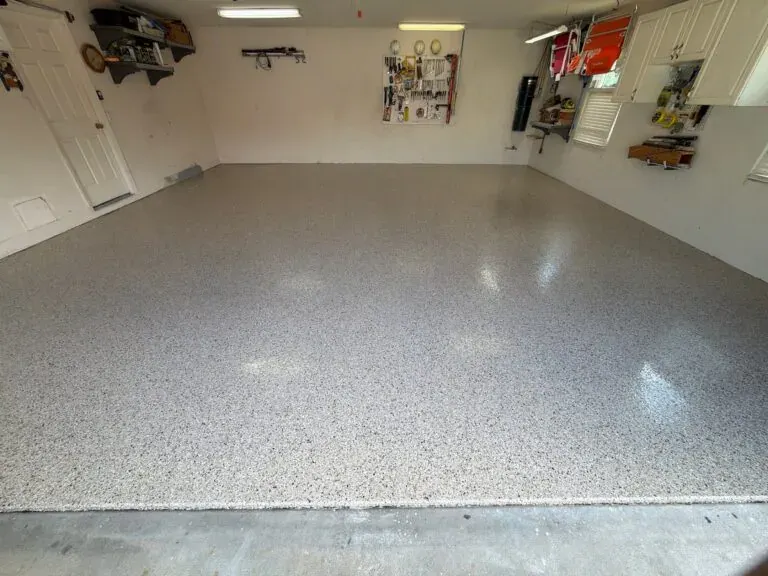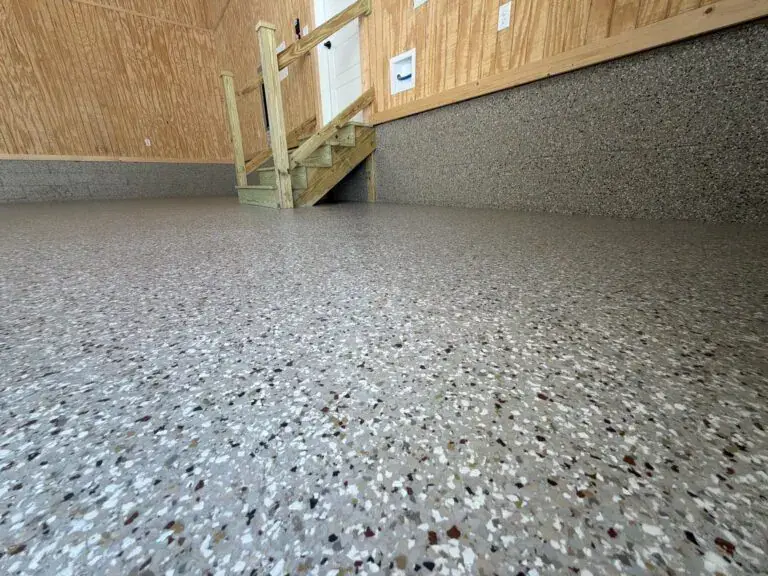

How a Pebble Pool Deck Coating Works
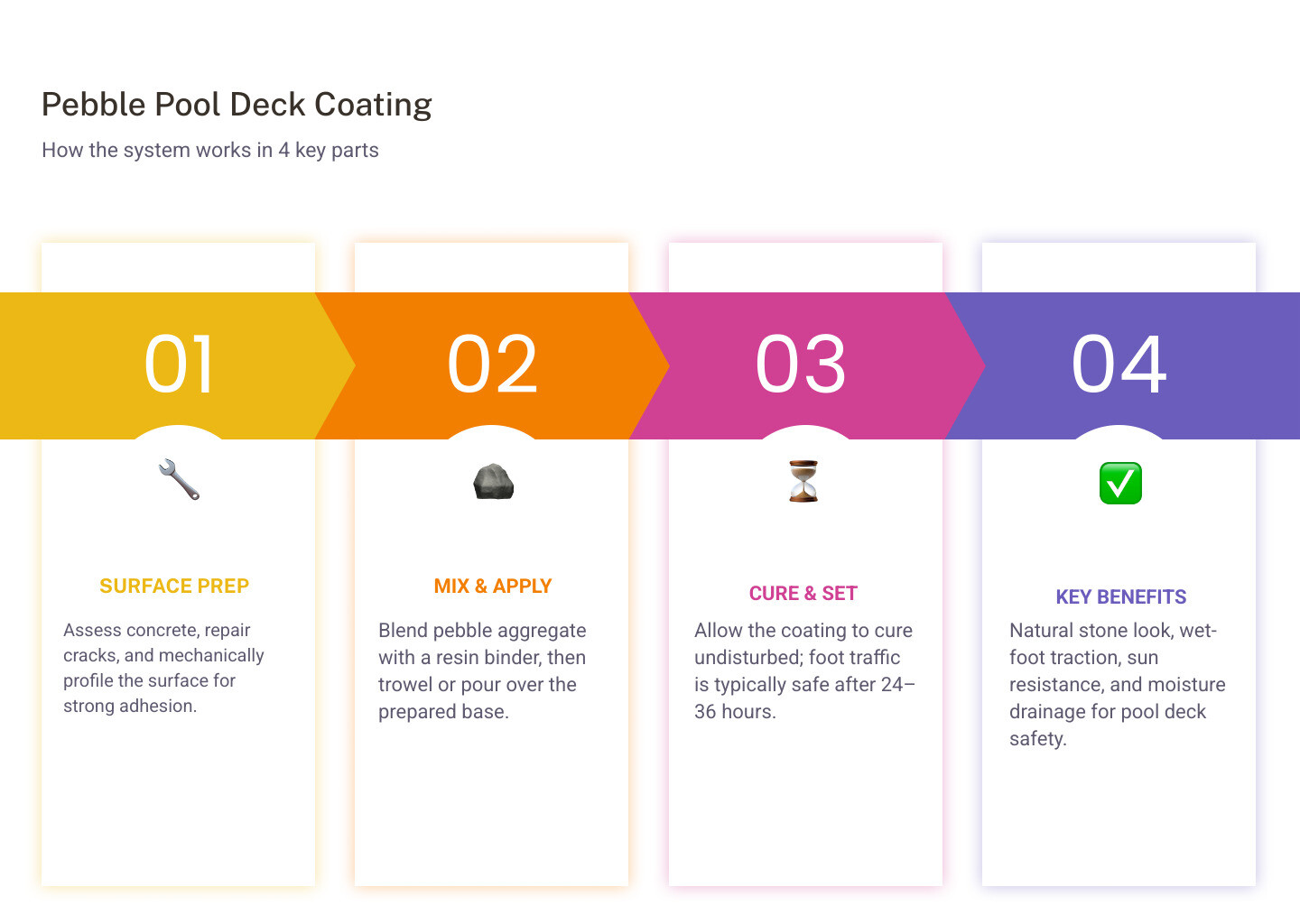
A pebble pool deck coating is a layer of small stones held together by a resin binder and applied over a prepared surface. To install one, assess the concrete, repair cracks as needed, prepare the surface for adhesion, then mix and spread the coating according to the product instructions. Keep the deck out of use until the coating has cured.
The appeal is a natural stone look with texture underfoot. But looks alone are not enough for a pool deck: ask how the chosen system handles wet-foot traction, sun exposure, and water drainage. Those details depend on the materials and the condition of the deck beneath them.
In 2026, outdoor living trends focus heavily on safety, long-term resilience, and low-maintenance luxury. As homeowners spend more time enjoying their backyards, safety around water and moisture management become just as critical as visual style.
What Is a Pebble Pool Deck Coating and How Does It Work?
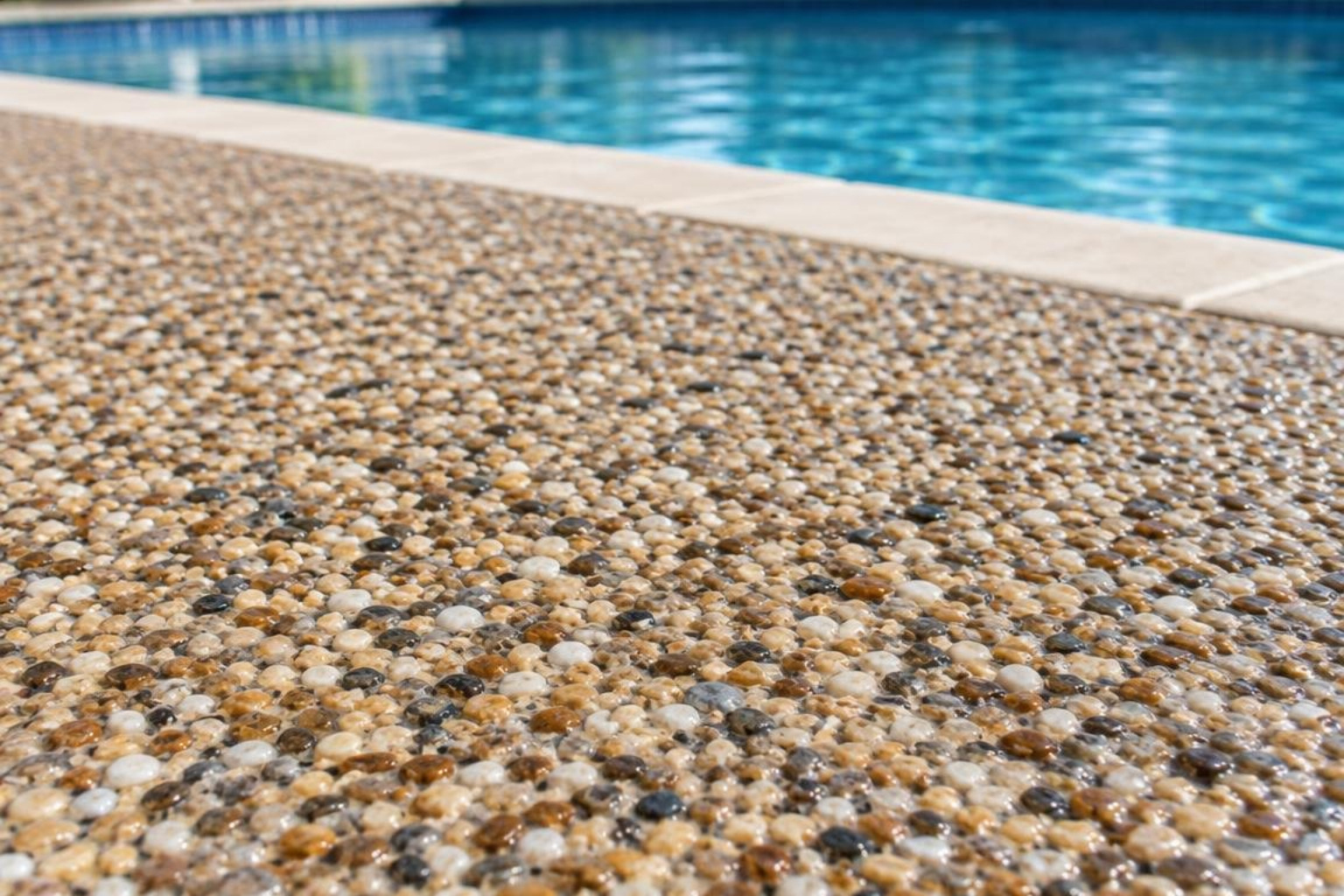
A pebble pool deck coating transforms basic or weathered concrete into a decorative, textured stone surface. The system relies on blending aggregate with a liquid binder, which is then troweled or poured over a mechanically prepared concrete base.
Because the stones are bound together rather than buried in thick cement, the profile retains a distinct natural look. The final performance, however, depends on proper bonding, the resin chemistry, and how well the overall system allows for surface drainage and barefoot traction.
Materials and Aggregate Composition
The visual appeal and physical durability of these systems depend entirely on the aggregate and resin selected:
- Smooth River Pebbles: Naturally rounded stones harvested from riverbeds or coastal quarries, offering a smooth feel underfoot with organic color variations.
- Quartz Aggregate: Manufactured or crushed quartz crystals that provide uniform coloring and exceptional mineral hardness.
- Resin Binders: Specialized polyurethane or other exterior-grade adhesives that coat every individual stone and lock the matrix to the concrete slab. We avoid standard non-UV-stable binders for outdoor residential decks because they yellow and turn brittle under direct sunlight.
- Custom Blends: Combinations of multiple stone sizes, contrasting colors, or recycled decorative aggregates to create custom borders and patterns.
Key Performance Characteristics and Permeability
The matrix of stones creates micro-channels across the surface. In porous, resin-bound configurations, rainwater and splash-out can filter directly through the stone layer to run off along the concrete slab below. While this helps reduce puddling, it also means the underlying concrete must slope correctly to prevent trapped moisture.
Thermal comfort and barefoot traction are significant considerations. Natural stone absorbs ambient heat from direct sunlight, though lighter stone shades can keep the deck more comfortable under the summer sun compared to untreated, dark concrete. The rounded edges of the stones provide mechanical grip for wet feet, creating natural slip resistance.
How to Install a Pebble Pool Deck Coating Step by Step
Installing an aggregate coating is a precision task. A successful application requires thorough substrate evaluation, moisture testing, and dedicated safety equipment to prevent premature failure.
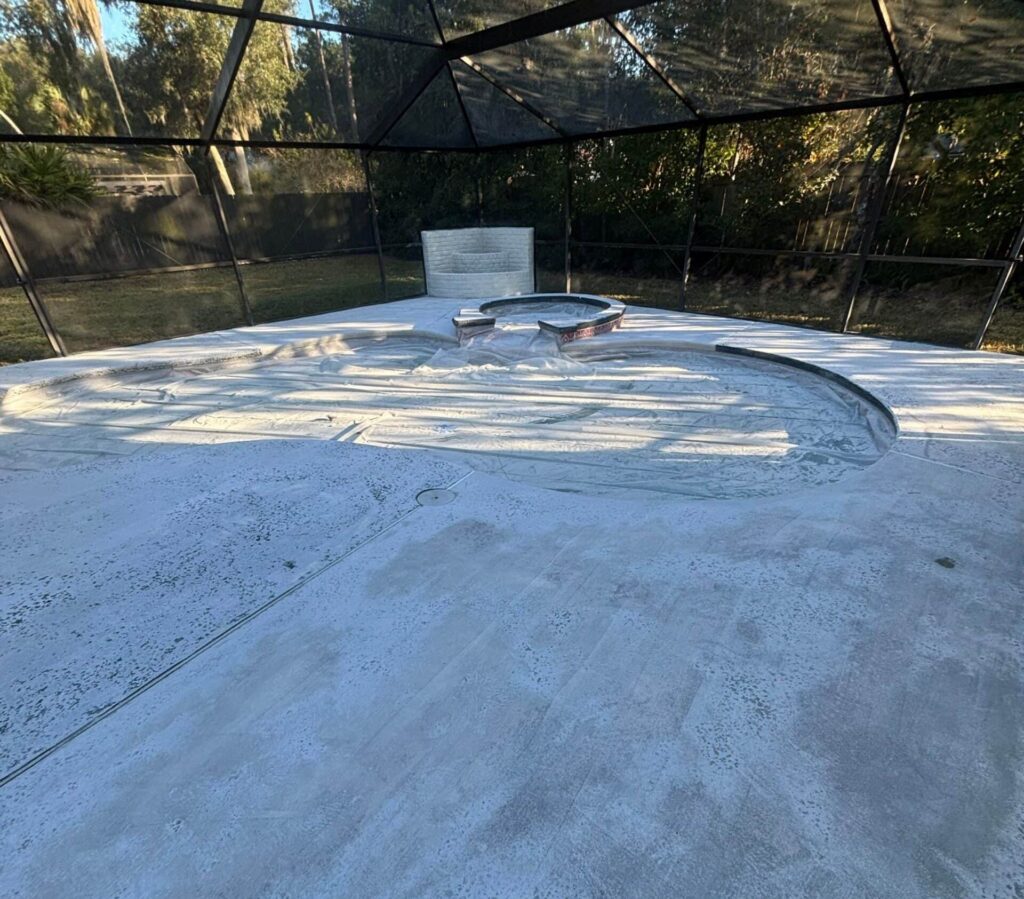
Before beginning, gather essential tools and safety equipment:
- Heavy-duty concrete diamond grinder with an integrated HEPA dust extractor
- Mechanical paddle mixer and mixing buckets
- Steel finishing trowels and gauge rakes
- Crack repair polymers and patching mortar
- Moisture meter
- Personal protective equipment: nitrile gloves, eye protection, and organic vapor respirators
Concrete Substrate Preparation and Crack Repair
A coating is only as stable as the slab beneath it. The first step involves inspecting the concrete for structural integrity and local pool deck safety requirements.
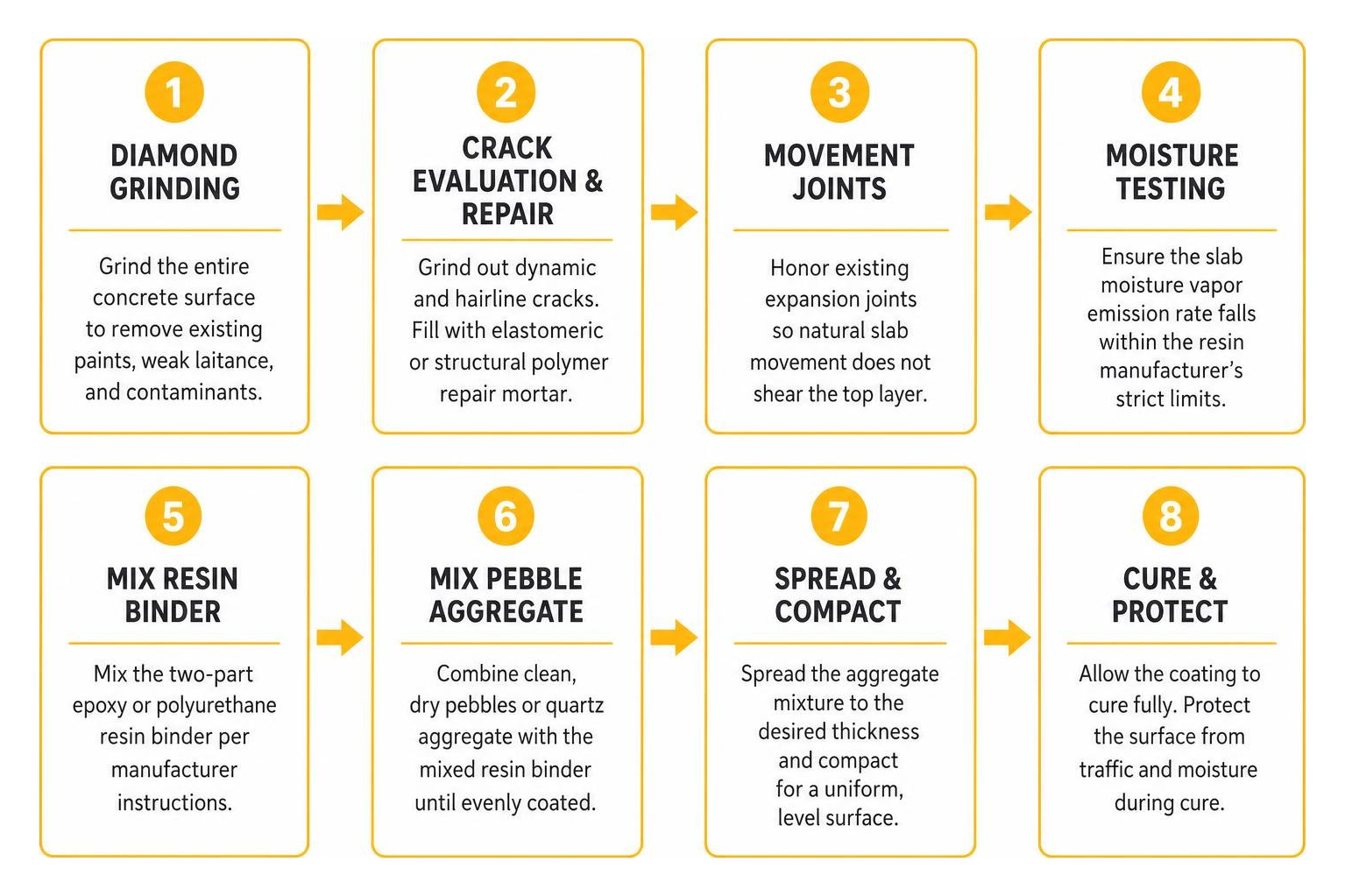
We always emphasize mechanical preparation:
- Diamond Grinding: Grind the entire concrete surface using diamond tooling to remove existing paints, weak laitance, and contaminants, creating an open concrete surface profile.
- Crack Evaluation & Repair: Grind out dynamic and hairline cracks. Fill them with an elastomeric or structural polymer repair mortar to establish a level surface.
- Movement Joints: Honor existing expansion joints so natural slab movement does not shear the top aggregate layer.
- Moisture Testing: Ensure the slab moisture vapor emission rate falls within the resin manufacturer’s strict limits.
Step-by-Step Pebble Pool Deck Coating Installation
Once preparation is complete, follow the manufacturer’s precise mixing and application steps:
- Mechanical Mixing: Pre-mix the resin and hardener components at the specified ratio using a low-speed drill and paddle.
- Aggregate Blending: Pour the mixed resin over clean, dry aggregate in a mechanical mixer, ensuring every single pebble is thoroughly coated.
- Placement and Screeding: Dump the wet aggregate mix onto the prepared deck and distribute it evenly using gauge rakes to maintain the specified thickness.
- Hand Troweling: Compact and smooth the aggregate using stainless steel trowels. Maintain firm, even pressure to lock the stones together and eliminate hollow spots.
- Edge Detailing: Hand-tool the perimeter around pool copings, drains, and exterior footings to create clean, seamless transitions.
Carefully adhering to manufacturer specifications and proper placement techniques ensures strong adhesion and a uniform surface profile across the entire pool deck.
Curing Time and Initial Use Guidelines
Resin systems have a strict workability window—often around 30 to 45 minutes once mixed, depending on ambient temperatures. Keep the freshly coated deck shielded from rain and debris. The system typically requires 24 to 36 hours of curing before allowing light foot traffic, while full chemical and physical cure can take several days depending on humidity and heat.
Pebble Stone Coating vs. Alternative Pool Deck Resurfacing Systems
When evaluating deck resurfacing options, it helps to examine how different systems handle weather, maintenance, and regular pool activity.
| Coating System | Cost Over Time | Maintenance Demands | UV Stability | Typical Cure Window |
|---|---|---|---|---|
| Pebble / Resin-Bound Aggregate | Moderate to High (frequent resealing) | High (organic debris trapping) | Moderate (yellowing if lower-grade resin is used) | 24–48 hours |
| Checkmate Polyurea / Polyaspartic | Low (long-term resilience) | Very Low (non-porous, easy mop/wash) | 100% UV Stable (non-yellowing) | 24 hours (foot traffic) |
Cost and Lifespan Comparison
Evaluating surface costs means looking at the total life of the floor rather than just initial installation expenses. Single-part floor paints and budget DIY sealers carry a low upfront purchase price, but they frequently peel, chip, and suffer from hot-tire pickup or water blistering within a single season. The recurring cost of stripping and recoating makes them expensive over time.
Resin-bound stone surfaces can last between 10 to 20 years, but their ongoing cost increases with the need for periodic topcoat resealing every few years to keep stones locked in place. (Standard epoxy systems are sometimes specified for commercial use in specific situations, but we don’t use them for outdoor residential pool decks because they break down and yellow under direct UV exposure.)
Polyurea and Polyaspartic Coatings vs. Pebble Finishes
While pebble coatings offer a rustic stone look, they feature thousands of small crevices that can trap dirt, algae, and organic debris.
At Checkmate Coatings, we install a multi-layer system featuring a deep-penetrating polyurea base coat, a full broadcast of decorative color flakes, and an ultra-durable polyaspartic clear topcoat.
Our polyurea base coat creates an indestructible bond with the concrete, flexing through temperature swings without cracking. The polyaspartic topcoat is 100% UV stable, chemically resistant to pool chlorine and saltwater, and completely non-porous. Best of all, our certified crews complete the entire installation in as little as one day, letting you get back to using your outdoor space quickly.
Longevity, Care, and Ongoing Maintenance
A pool deck endures constant exposure to water, UV radiation, chlorine, and foot traffic. Keeping it clean and structurally intact requires an understanding of how its top layer interacts with the environment.
Maintenance Demands of a Pebble Pool Deck Coating
Because open-matrix pebble surfaces are textured and porous, they require regular upkeep:
- Organic Staining: Wet leaves, pine needles, and pollen settle into the voids between stones, resulting in tannin stains if not blown off or washed away promptly.
- Chemical Exposure: Concentrated pool chemicals or unbalanced water chemistry can degrade lower-grade binders, necessitating periodic resealing with an exterior-grade clear resin.
- Washing: Routine cleaning requires gentle pressure washing and non-acidic detergents. Aggressive, high-pressure washing at close range can dislodge bonded pebbles.
Common Issues: Surface Wear and Aggregate Retention
Over time, heavy traffic paths can experience stone loss, commonly called “pop-outs.” If the resin matrix wears down from sun exposure or heavy foot traffic, loose aggregate will end up on the deck or swept into the pool filter.
Delamination can also occur if the original concrete was not properly ground and profiled prior to installation. Repairing individual worn spots requires hand-troweling fresh stone-and-resin patches, which can leave visible color variations against the aged surface.
Frequently Asked Questions About Pool Deck Coatings
Can pebble coatings be applied over existing cracked concrete?
Yes, but only if the concrete is structurally sound and all cracks are properly ground out, cleaned, and filled with a rigid or flexible repair compound before application. Any moving structural fractures in the slab will eventually telegraph through the stone layer if not properly addressed.
How does pebble coating handle pool chemicals and standing water?
Performance depends entirely on the resin binder used. High-grade systems tolerate splashing from treated pool water, but standing water can cause mineral deposits to accumulate within the stone voids. A coating will not solve improper deck grading; water must have a designated path to drain away from the pool edge.
Is a pebble surface cooler underfoot than bare concrete?
A pebble surface can feel cooler than dark, flat concrete because the natural aggregate texture creates minor airflow pockets beneath your feet, and lighter stone blends reflect more sunlight. However, in direct, intense summer sun, all stone and aggregate surfaces will eventually absorb and hold ambient heat.
Conclusion
Upgrading your pool surround transforms your entire backyard, but you need a surface that combines lasting safety, UV protection, and simple maintenance. While pebble stone systems offer a classic textured look, their porous surface requires ongoing care to manage trapped debris and aggregate wear.
At Checkmate Coatings, we provide a superior alternative for homeowners who want lasting beauty without the maintenance headaches. We install an advanced polyurea base coat paired with a clear, non-yellowing polyaspartic topcoat and custom decorative flakes. Every project is backed by our worry-free residential warranty and completed with diamond-grind surface preparation by our own in-house W2 crews—never subcontractors.
Ready to transform your pool area with a durable, slip-resistant surface installed in as little as one day? Explore our high-performance pool deck coatings today to schedule your consultation!