
What Is the Best Garage Floor Coating in Florida?
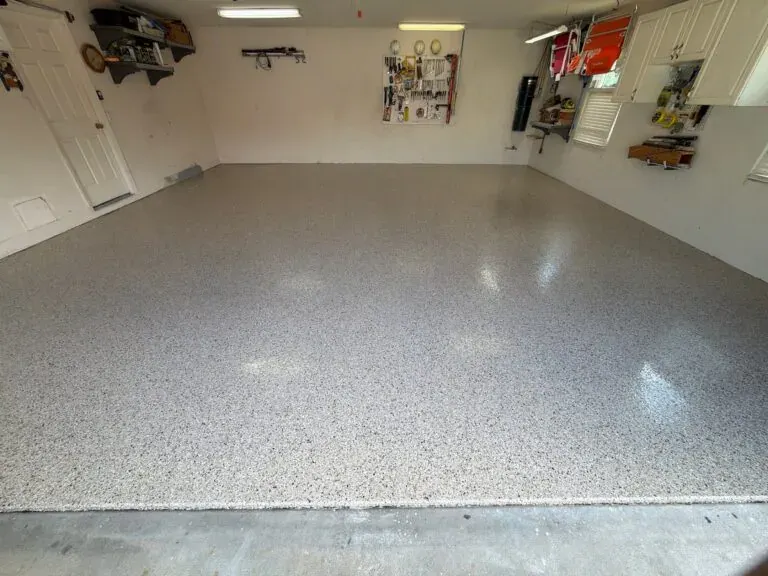
The best garage floor coating in Florida is a professionally installed polyurea base coat with a polyaspartic clear topcoat. It offers a durable finish for garages exposed to heat, sun, rain, and hot tires. Proper concrete prep matters just as much as the coating: moisture or a weak bond can lead to peeling.
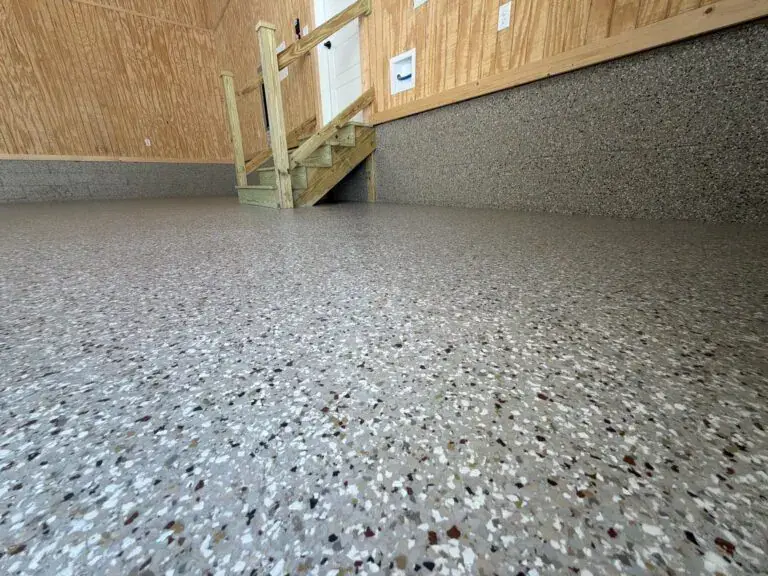
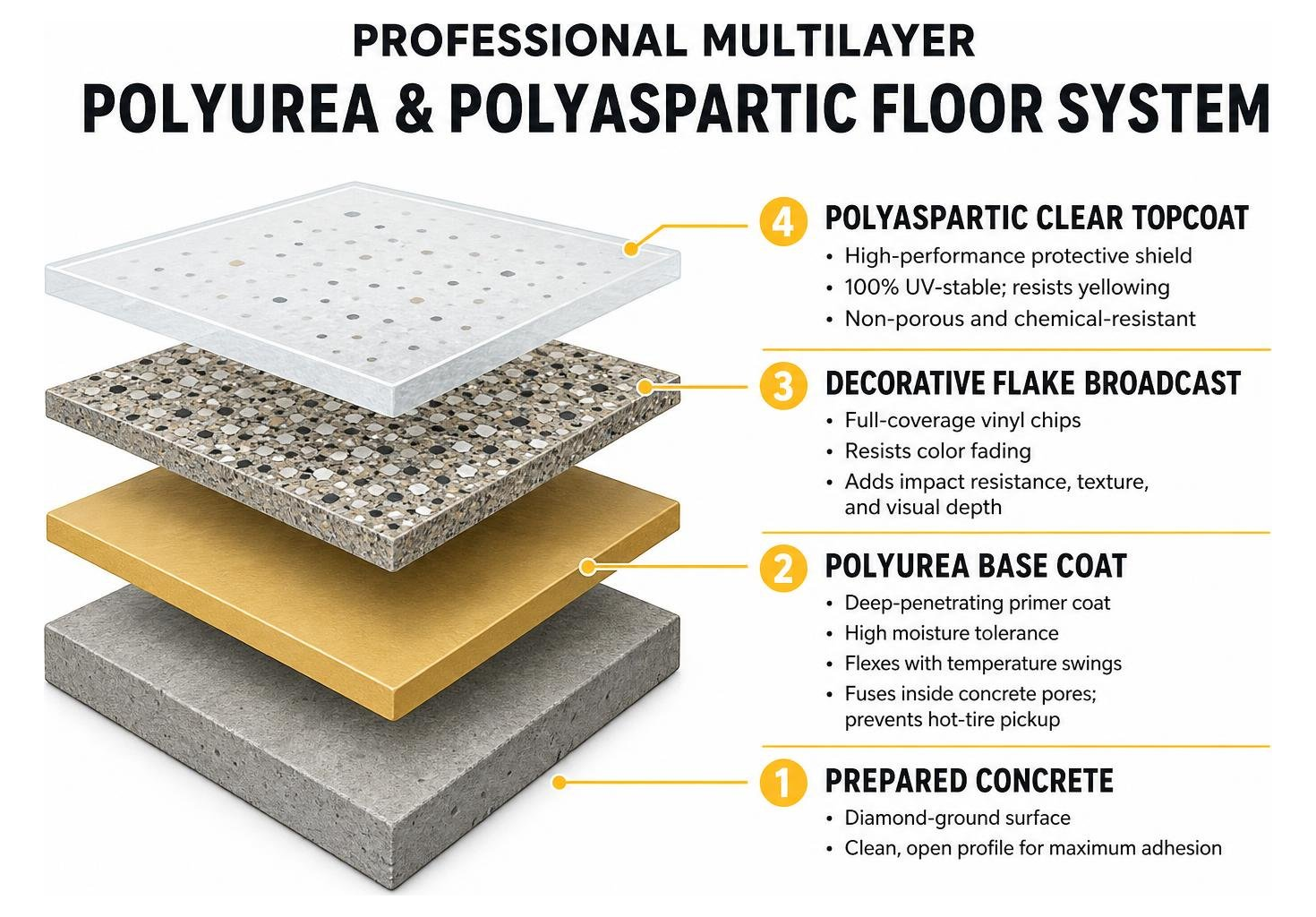
At Checkmate Coatings, we diamond-grind the concrete, then install a polyurea base coat, decorative flakes, and a polyaspartic clear topcoat. Our in-house crews can install the system in one day. It is also an option for patios, pool decks, driveways, and other concrete surfaces.
Choosing the Best Garage Floor Coating in Florida: System Considerations
Finding the best garage floor coating in Florida means taking our unique, subtropical climate into account. Between high humidity, persistent moisture vapor driving up through concrete slabs, intense UV radiation, and daily rain showers, residential concrete takes a beating.
When evaluating options, homeowners often encounter traditional epoxy, 1-part concrete paints, DIY box kits, and penetrating sealers. While simple sealers and 1-part paints are readily available at local hardware stores, they often fail quickly under Florida conditions. They lack the film thickness and chemical bonding required to resist hot-tire pickup—where hot vehicle tires soften the paint and literally peel it off the floor.
Standard residential DIY epoxy kits also present challenges. Epoxy cures very slowly, becomes brittle over time, and is notoriously vulnerable to UV ambering (yellowing) when exposed to sunlight near open garage doors. While some commercial projects specify epoxy systems for controlled indoor industrial spaces, we do not use or recommend traditional epoxy for residential Florida garages.
Instead, our multi-layer polyurea and polyaspartic system provides the flexibility, chemical resilience, and UV stability needed for long-term performance across residential concrete surfaces.
| System Layer / Coating Type | Role & Chemistry | Florida Climate Performance | Key Advantages |
|---|---|---|---|
| Polyurea Base Coat | Deep-penetrating primer coat | High moisture tolerance; flexes with temperature swings | Fuses directly inside concrete pores; prevents hot-tire pickup |
| Decorative Flake Broadcast | Full-coverage vinyl chips | Resists color fading and hides slab imperfections | Adds impact resistance, texture, and visual depth |
| Polyaspartic Clear Topcoat | High-performance protective shield | 100% UV-stable; resists yellowing from sunlight | Non-porous, chemical-resistant, and rapid-curing |
Modern polyaspartic floor coatings use aliphatic chemistry to help resist discoloration and maintain wear resistance over time.
Why We Use a Polyurea Base Coat and Polyaspartic Clear Topcoat
We build our multi-layer flake system around two distinct, complementary polymers.
First, we apply a pure polyurea base coat. Polyurea wet-out penetrates deep into the mechanical profile created during our concrete prep, establishing a tenacious physical bond that will not peel or delaminate. It maintains elongation and flexibility, meaning it can expand and contract as concrete temperatures fluctuate between humid summer afternoons and cooler winter mornings.
Next, we broadcast high-grade decorative vinyl flakes to complete rejection across the wet base coat, creating a robust, textured matrix. Finally, we seal everything with an aliphatic polyaspartic clear topcoat. Unlike epoxy, polyaspartic resins cure rapidly without trapping lingering moisture, are four times more abrasion-resistant, and remain crystal clear even under intense sunlight.
Design and Safety Considerations for Florida Garages

A garage in Florida is rarely just a place to park a car. It frequently serves as a workshop, home gym, laundry area, hobby room, or entryway for wet feet tracking in water from an afternoon storm or the backyard swimming pool. Because of this, aesthetics and physical safety must go hand-in-hand.
What Makes a Garage Floor Coating Slip-Resistant and Safe?
Bare, smooth-troweled concrete turns dangerously slick when wet. When vehicles drive in during an August downpour, water puddles rapidly on non-porous surfaces.
We address this safety hazard by combining a full broadcast of vinyl color flakes with specialized slip-resistant texturing agents in our polyaspartic topcoat. The broadcasted flakes create a subtle, multi-dimensional texture beneath the clear coat. We balance this profile so the surface provides confident wet traction underfoot without creating a harsh, sandpapery finish that catches dirt or shreds cleaning mops.
Full Flake Blends vs. Solid Color Finishes for Hobbyists and Workspaces
We install a full-broadcast flake finish, with flakes visible across the entire coated surface—not a solid-color finish. Here is how our flake finish compares with solid-color coatings for different uses:
- Full Flake Blends: Our full flake systems are the top choice for most homeowners. The dense, multi-tone color chips naturally camouflage everyday road dust, tracked-in sand, and minor surface dirt between cleanings. The multi-colored finish gives the entire space a modern, polished aesthetic that complements home interiors.
- Solid Color Finishes: While sleek and modern, high-gloss solid color coatings highlight every stray footprint and speck of dust. However, for dedicated hobbyists or mechanics who regularly work with small screws, washers, and micro-hardware, solid floors offer high contrast that makes dropped parts easy to spot immediately. Solid finishes also provide maximum light reflectivity, brightening dimly lit workbenches.
Florida Garage Coating Longevity, Cure Times, and Cost Factors
When evaluating floor coatings, the true financial picture becomes clear when evaluating total lifecycle costs rather than just the initial installation quote.
Inexpensive DIY kits and hardware store concrete paints may seem economical on day one, but they frequently fail within 12 to 24 months due to moisture vapor pressure, hot tires, and UV degradation. Stripping and repainting a failed DIY floor every two years quickly turns into an exhausting and expensive cycle.
A professionally installed polyurea and polyaspartic system is built as a permanent concrete upgrade. By investing in an industrial-grade system upfront, you protect your concrete substrate, increase your property value, and eliminate the frustration of continuous maintenance.
Long-Term Value and Durability
A properly bonded polyurea and polyaspartic floor easily endures decades of everyday family use. It resists hot tire marks, automotive fluids, motor oil, bleach, battery acid, and dropped tools without scratching, chipping, or flaking. Because the coating is impervious to water, it acts as a permanent barrier that prevents mold, mildew, and moisture from degrading the underlying concrete slab.
Cure Time Timelines: Light Foot Traffic vs. Vehicle Parking
One of the greatest practical benefits of our polyurea and polyaspartic chemistry is its rapid turnaround time. Traditional epoxy installations often require three to five days of application and up to a full week of curing before you can safely pull your car back inside.
Our advanced systems allow for rapid, predictable return-to-service schedules:
- Same-Day Installation: Our certified crews complete prep, base coat, flake broadcast, scraping, and topcoat in as little as one day.
- Light Foot Traffic: You can walk on your new floor in just 24 to 36 hours.
- Full Vehicle Parking: You can drive and park your vehicles back inside after a minimum of 48 hours.
What to Look for in a Professional Floor Coating Contractor
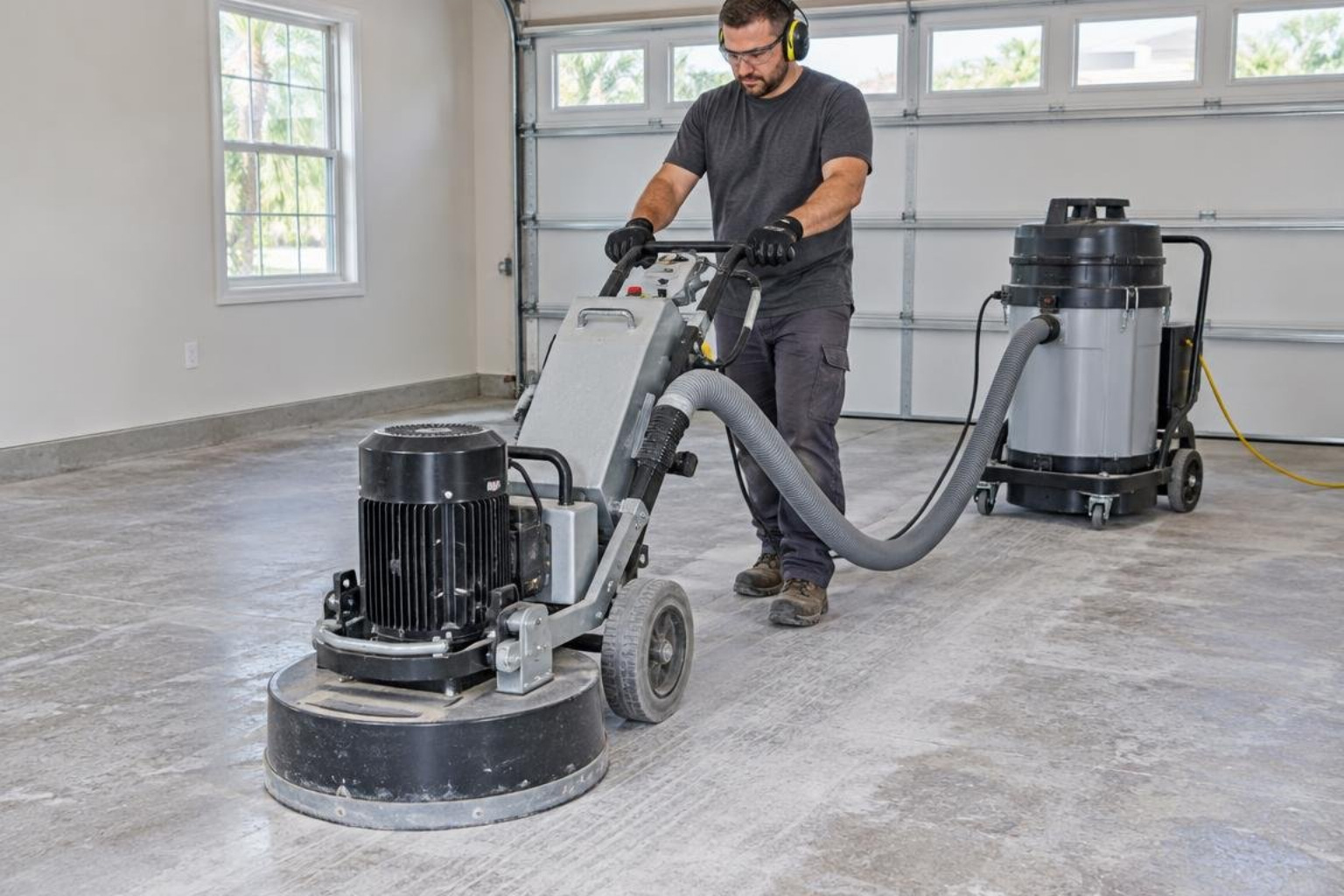
A floor coating is only as durable as the concrete preparation beneath it. The greatest chemical formula in the world will fail if applied over poorly prepped, contaminated, or smooth concrete. When vetting contractors, look closely at their mechanical preparation methods, business structure, and warranty terms.
Surface Preparation: Diamond Grinding vs. Acid Etching
Some low-cost installers and DIY kits rely on muriatic acid etching to prep concrete. In Florida’s humid environment, acid etching is unreliable. It introduces gallons of unwanted water into an already damp slab, fails to open hard-troweled concrete pores evenly, and leaves behind acidic chemical residues that ruin polymer adhesion.
We mechanically diamond-grind every single square foot of concrete using heavy industrial planetary grinders paired with HEPA-filtered dust collection systems. Diamond grinding achieves three critical objectives:
- It opens up the concrete’s micro-pores to an optimal concrete surface profile.
- It removes existing surface contaminants, oils, and weak top-layer cement laitance.
- It creates a rough mechanical profile that allows the polyurea base coat to fuse directly into the slab.
In-House Installation Teams and Warranty Protection
Many home improvement companies subcontract their floor installations to third-party laborers who may lack specialized training and proper equipment.
At Checkmate Coatings, we never use subcontractors. Every floor is installed by our dedicated, in-house W2 professional crews who are trained on our exact multi-layer systems. We stand behind our workmanship with our Stress-Free Warranty, giving you peace of mind that your floor will stay anchored, vibrant, and protected against everyday residential use.
Frequently Asked Questions About Florida Garage Floor Coatings
How long does a polyaspartic garage floor coating last in Florida?
When installed over diamond-ground concrete with a penetrating polyurea base coat, a polyaspartic clear system can easily last 15 to 20 years or more without peeling, yellowing, or sloughing off under hot tires. Its chemical composition withstands Florida’s high humidity and UV radiation far better than traditional paints or DIY epoxies.
How soon can you drive on a newly coated garage floor?
We recommend waiting a minimum of 48 hours before parking vehicles on your new coating. You can resume light foot traffic within 24 to 36 hours after the polyaspartic topcoat is applied.
What preparation helps a coating bond to Florida concrete?
Mechanical diamond grinding is the gold standard for concrete surface prep. It removes surface sealers, oils, and weak concrete cream while profiling the slab to allow the base coat to lock deep into the concrete pores.
Conclusion
Protecting your concrete floor against Florida’s intense heat, daily rain, and moisture requires a coating system engineered for durability. By pairing industrial diamond grinding with a flexible polyurea base coat, full decorative flake broadcast, and a UV-stable polyaspartic clear topcoat, you get a beautiful, slip-resistant surface that will not peel or fade over time.
While we install specialized industrial systems—including our Polyaspartic Flake Floor Coating, Grind and Seal MMA System, Epoxy Flake Flooring System, and Three-Coat Epoxy Flooring System—for specific commercial and manufacturing environments, our polyurea and polyaspartic flake system remains the gold standard for residential garages, patios, pool decks, and driveways.
Ready to transform your home with a floor that stands up to the elements? Explore our Checkmate Coatings Jacksonville garage floor solutions to schedule your consultation and get a worry-free, one-day concrete upgrade.