
Choosing a Finish for Stamped Concrete
Quick Answer
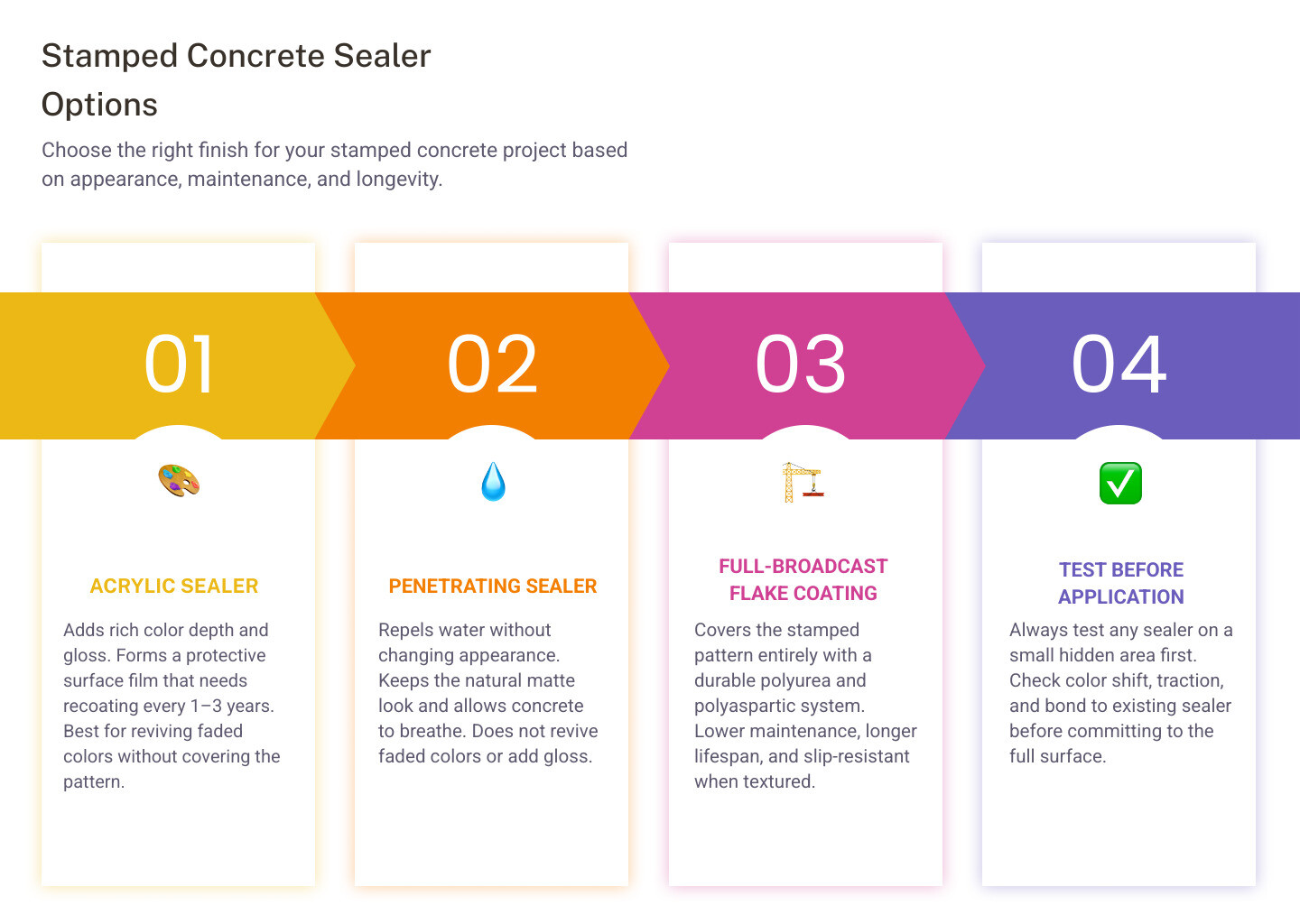
For stamped concrete, choose an acrylic sealer to deepen the color or a penetrating sealer to keep a natural look while repelling water. If you are willing to replace the stamped finish, a professionally installed polyurea and polyaspartic flake coating is our preferred lower-maintenance option for a patio or walkway.
The best concrete sealer for stamped concrete depends on the finish you want to keep. Acrylic adds color depth and a protective surface film, but needs periodic recoating. A penetrating sealer helps repel water without adding gloss, but does little to revive faded colors. If keeping the stamped pattern is not a priority, we recommend a full-broadcast flake coating instead. That finish covers the original pattern rather than sealing it.
Installer tip: Test any sealer on a small, hidden area first. Check its color, traction, and bond to any existing sealer before treating the whole patio.
What Is the Best Concrete Sealer for Stamped Concrete?
When homeowners ask us how to protect their decorative flatwork, we look at the physics of how stamped concrete is made. Stamped concrete gets its rich, multi-toned look from layered color hardeners and powdered release agents. These secondary colors settle into textured joints, grout lines, and surface impressions.
Because stamped concrete has low texture valleys, it requires a sealer that can protect those delicate topical pigments from sunlight, foot traffic, and water intrusion without pooling or turning cloudy. Industry guidelines from the American Society of Concrete Contractors outline decorative concrete sealing standards that focus on balancing film thickness with moisture vapor breathability.
The two main chemistries used on stamped surfaces are topical acrylics and subsurface penetrating repellents. Each works differently and produces distinct visual results.
Solvent-Based Acrylic vs. Water-Based Acrylic Sealers
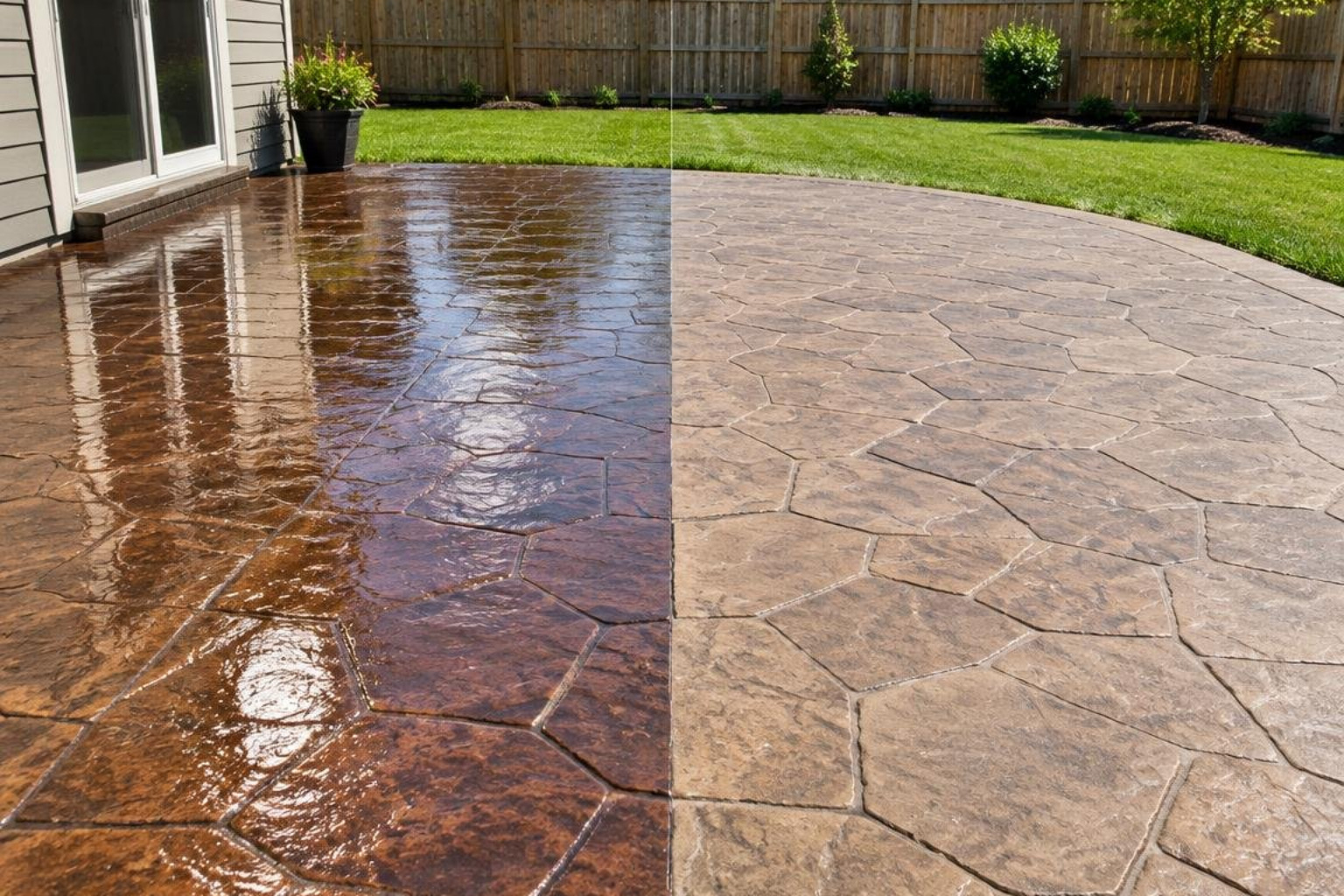
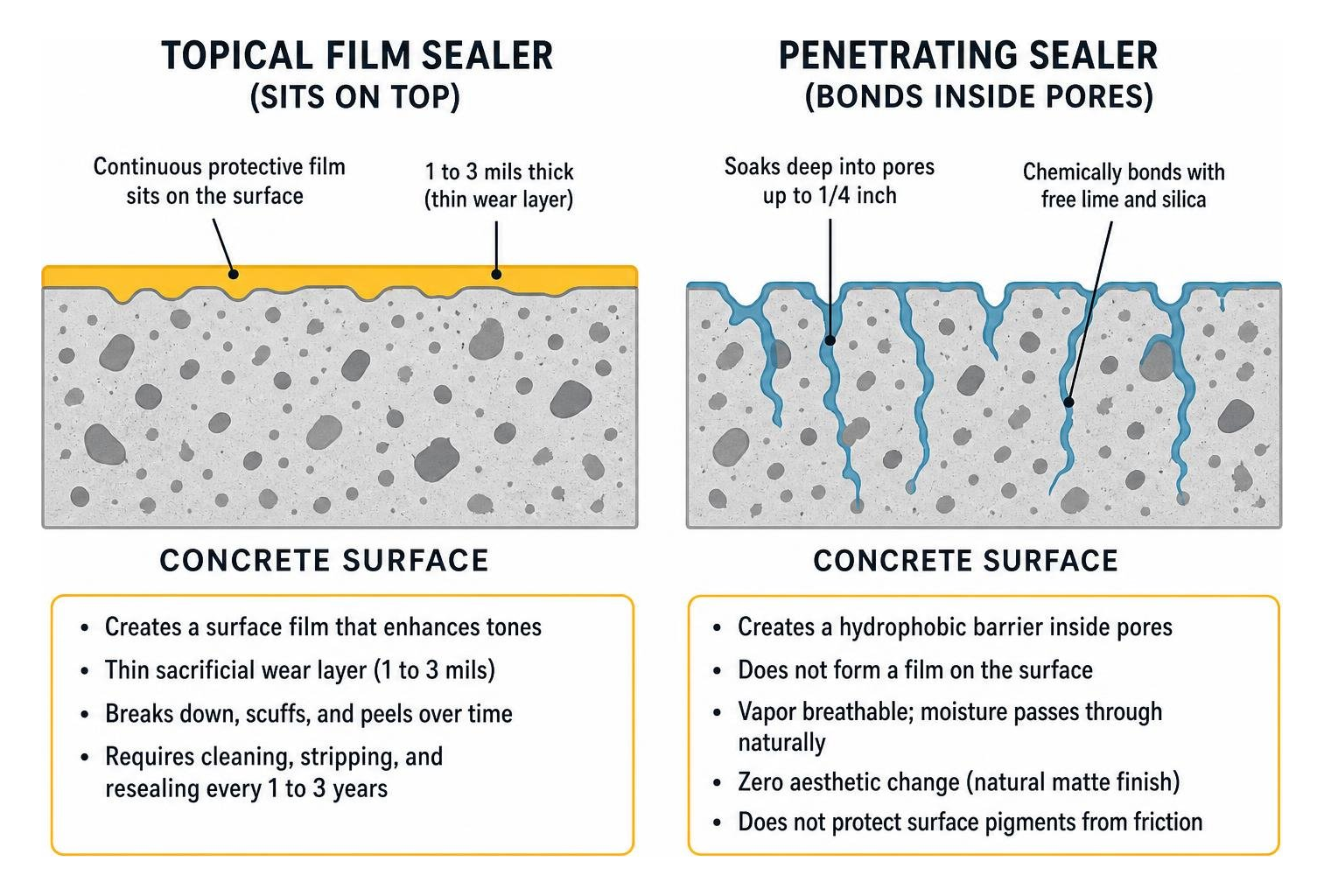
Topical acrylic sealers are the traditional standard for stamped surfaces because they create a continuous protective film that enhances surface tones.
- Solvent-Based Acrylics: These sealers use a solvent carrier (like xylene or acetone) to dissolve acrylic resins (usually methyl methacrylate, or MMA). As the solvent evaporates, the resin wets the concrete pores and deepens earthy tones, giving stamped concrete a rich “wet-look” sheen. They generally contain 20% to 30% solids by volume. A major advantage of solvent-based acrylic is that older coats can often be softened and reactivated with xylene to clear up minor hazing without stripping.
- Water-Based Acrylics: These use water as a carrier for suspended polymer particles. They release significantly lower volatile organic compounds (VOCs) and have very little odor, making them useful in enclosed or tightly regulated spaces. However, water-based acrylics do not darken or enrich pigments as dramatically as solvent formulas. They dry to a milky, satin, or gloss film that sits higher on the surface. If a water-based acrylic fails, it cannot be reactivated with solvents and must be mechanically or chemically stripped.
While acrylics provide an initial pop of color, they are thin sacrificial wear layers. A single dry coat is usually only 1 to 3 mils thick (a mil is one-thousandth of an inch). Under hot sun and steady foot traffic, acrylic films break down, scuff, and peel. This frequent cycle of cleaning, stripping, and resealing every 1 to 3 years is the exact reason we do not use topical sealers as our primary outdoor surfacing system.
Penetrating Sealers vs. Film-Forming Sealers
The alternative to a topical film is a penetrating chemical repellent, such as a silane-siloxane blend.
Instead of sitting on top of the slab, penetrating sealers soak deep into the microscopic capillary pores of the concrete. There, they chemically cross-link with the free lime and silica in the substrate to create a hydrophobic (water-repelling) barrier up to a quarter-inch deep.
As explained in the ASCC sealer selection and application guide, penetrating sealers offer specific advantages and trade-offs on textured concrete:
- Vapor Breathability: Penetrating sealers do not form a plastic-like film over the surface. Moisture vapor rising from the ground passes through the concrete naturally without getting trapped, preventing white clouding or blushing.
- Zero Aesthetic Change: They leave the concrete looking flat and natural. They do not add gloss or a wet look.
- No Pigment Protection: Because penetrating sealers do not leave a topical wear layer, they do not protect the antique release powders sitting on the peaks and valleys of stamped patterns from physical friction.
Comparing Stamped Concrete Sealer Options and Longevity
Homeowners should consider the true life-cycle cost of maintaining their exterior walkways and patios. A lower upfront price for a bucket of sealer can turn into a recurring weekend project or contractor expense every couple of seasons.
| Feature / System | Solvent-Based Acrylic Sealer | Silane-Siloxane Penetrating Sealer | Checkmate Polyurea / Polyaspartic System |
|---|---|---|---|
| Primary Mechanism | Topical film-forming resin | Subsurface pore cross-linking | High-build, multi-layer mechanical bond |
| Visual Finish | Satin to high-gloss “wet look” | Natural, matte, unaltered appearance | Custom full-broadcast color flake finish |
| Typical Lifespan | 1 to 3 years before recoat | 7 to 10 years for water repellency | Multi-year, long-term durability |
| UV Resistance | Degrades, yellows, or clouds over time | Excellent (subsurface stability) | 100% UV stable; will not yellow or amber |
| Maintenance Cycle | Periodic stripping and re-application | Occasional power washing | Simple soap-and-water cleaning |
| Slip Hazard (Wet) | High unless traction grit is added | Unchanged from bare concrete profile | Built-in non-slip textured flake profile |
Evaluating outdoor concrete patio resurfacing options means balancing how much time you want to spend maintaining the surface against how you want it to perform over its entire lifespan.
Choosing the Best Concrete Sealer for Stamped Concrete Based on Lifespan
Sealer lifespan is defined by how long the chemistry protects the concrete before needing attention.
- Acrylic Coatings: Standard acrylics last between 18 and 36 months outdoors. In sunny climates, UV radiation oxidizes the thin acrylic resin, while thermal expansion causes micro-fractures in the film. Once water stops beading or the surface turns chalky, you must apply another coat.
- Penetrating Repellents: High-solids silane-siloxane sealers often protect against subsurface water intrusion for 7 to 10 years. While surface water beading may diminish after the first year or two as the outermost resin wears away, the deep hydrophobic zone remains active inside the pores.
Managing Slip Resistance, Freeze-Thaw, and UV Exposure
Outdoor flatwork faces three major environmental challenges:
- Slippery Walkways: High-gloss film-forming sealers fill in the micro-texture of concrete, turning smooth areas into slip hazards when wet. You must broadcast manufactured polymer grip beads or aluminum oxide into the topcoat during application to maintain footing.
- Freeze-Thaw and Salt Damage: When moisture enters unsealed concrete and freezes, it expands by about 9%, causing the surface to spall (flake and pit). Penetrating sealers help prevent moisture absorption and resist de-icing chemicals.
- UV Yellowing: Lower-grade acrylic sealers (such as styrene-acrylic copolymers) break down under direct sunlight, developing a cloudy yellow tint. Pure methyl methacrylate (MMA) resins offer better clarity, but all topical acrylics will eventually thin and haze under sustained sun exposure.
How to Apply, Recoat, and Maintain Stamped Concrete Sealers
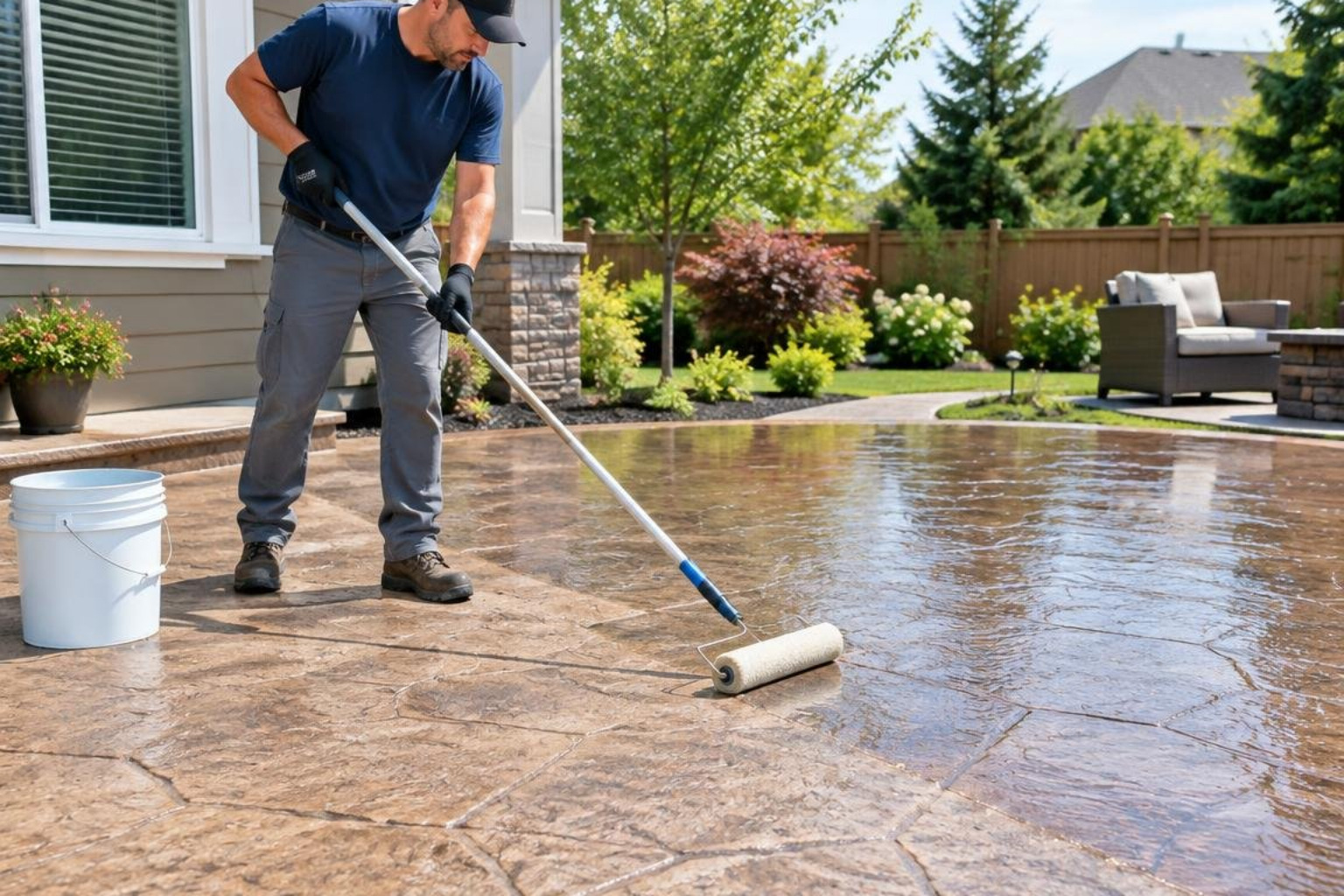
Applying a sealer to textured stamped concrete requires careful preparation to avoid trapped moisture and pooling. If you are replacing the stamped finish with a flake coating, the surface must first be evaluated and diamond-ground so the new system can bond properly.
Applying the Best Concrete Sealer for Stamped Concrete Surfaces
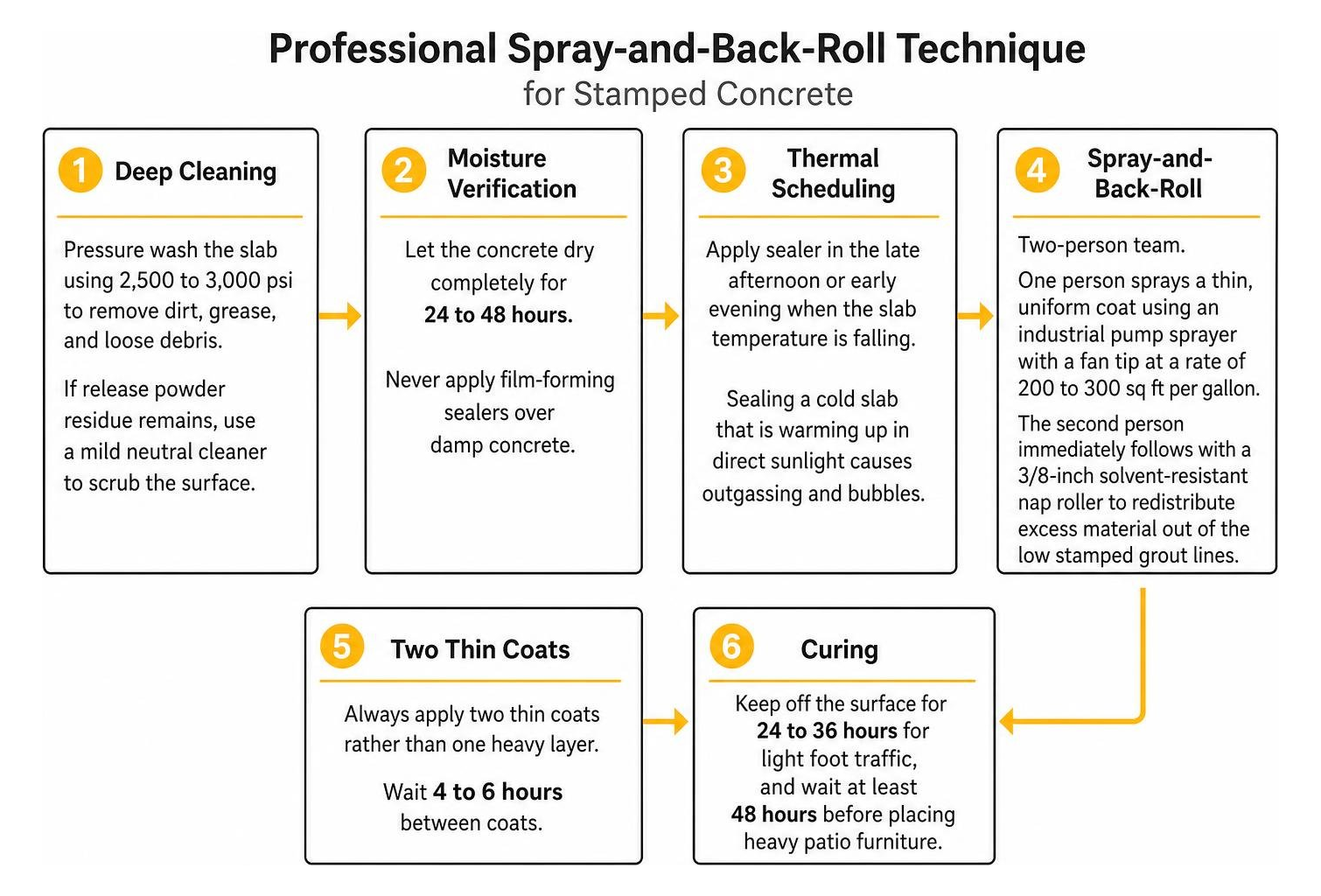
If you choose to seal your stamped concrete, follow this field-tested application process:
- Deep Cleaning: Pressure wash the slab using 2,500 to 3,000 psi to remove dirt, grease, and loose debris. If release powder residue remains, use a mild neutral cleaner to scrub the surface.
- Moisture Verification: Let the concrete dry completely for 24 to 48 hours. Never apply film-forming sealers over damp concrete; trapped water turns the cured sealer milky white.
- Thermal Scheduling: Apply sealer in the late afternoon or early evening when the slab temperature is falling. Sealing a cold slab that is warming up in direct sunlight causes outgassing (expanding air escaping concrete pores), which forms bubbles in the curing film.
- Spray-and-Back-Roll: The best way to apply sealer to textured concrete is with a two-person team. One person sprays a thin, uniform coat using an industrial pump sprayer with a fan tip at a rate of 200 to 300 square feet per gallon. The second person immediately follows with a 3/8-inch solvent-resistant nap roller to redistribute excess material out of the low stamped grout lines.
- Two Thin Coats: Always apply two thin coats rather than one heavy layer. Wait 4 to 6 hours between coats.
- Curing: Keep off the surface for 24 to 36 hours for light foot traffic, and wait at least 48 hours before placing heavy patio furniture.
Why Homeowners May Choose a Polyaspartic Coating Instead
While sealing keeps the original stamped pattern visible, many homeowners tire of the constant maintenance cycle. Over time, multiple coats of acrylic build up, turn milky, and begin to peel, requiring messy chemical stripping or aggressive sandblasting. Epoxy coatings share some of these drawbacks outdoors too: standard epoxy is prone to UV yellowing, can suffer hot-tire pickup on sun-exposed slabs, and often requires a longer cure before it can handle traffic. Epoxy systems are sometimes specified for certain commercial interiors, but we do not consider them the right fit for an outdoor residential patio or walkway.
When you want an attractive, durable surface that eliminates recurring resealing, we recommend our multi-layer polyurea and polyaspartic coating system, which we install on patios, walkways, driveways, pool decks, and garages alike.
Rather than rolling thin acrylic over an unprepared slab, our in-house W2 installation crews prepare the concrete with a commercial diamond-grinding process on every job. Diamond grinding creates a precise Concrete Surface Profile (CSP)—a textured micro-profile that allows our base coat to anchor mechanically deep into the slab pores.
Our multi-step system includes:
- Moisture-Mitigating Polyurea Base Coat: Polyurea is a flexible polymer that penetrates concrete pores, creating an industrial-strength bond that resists peeling and hot-tire pickup.
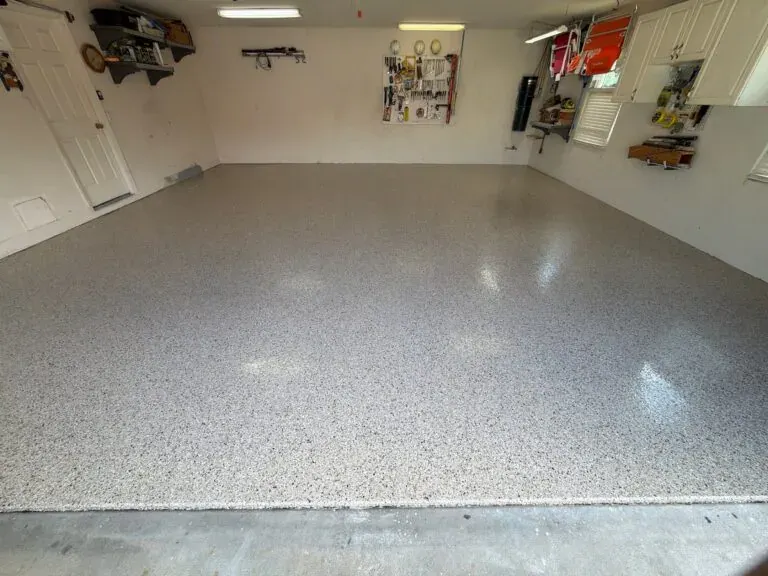
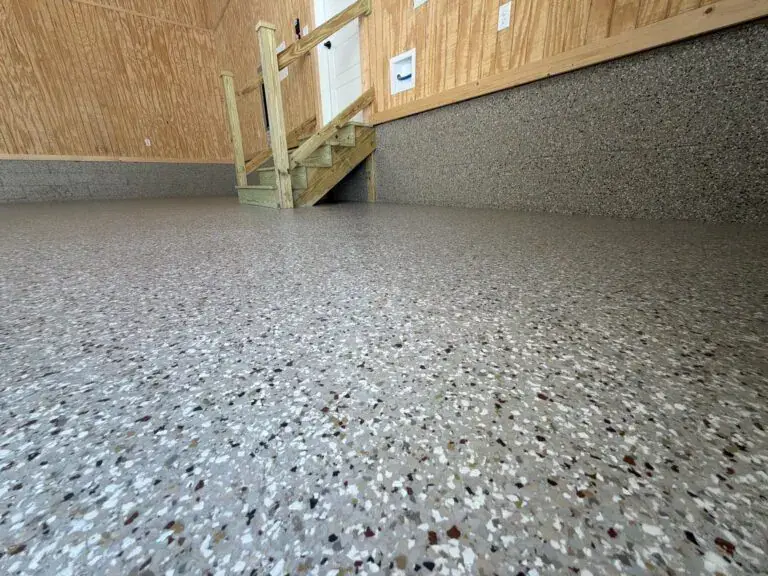
- Full-Broadcast Flake Finish: We broadcast decorative vinyl flakes to rejection (completely covering the base coat so flakes remain visible across the entire surface and no bare resin shows through). This gives you an even, slip-resistant texture and hides surface imperfections across the entire floor. You can match any outdoor aesthetic with our wide range of coating colors.
- 100% Solids Polyaspartic Clear Topcoat: Polyaspartic is an advanced aliphatic coating that is completely UV stable. Unlike standard topical sealers, it will never yellow, fade, or blush from sun exposure. It resists household chemicals, outdoor spills, and heavy wear.
We complete this full installation in as little as one day. You can return to light foot traffic in 24 to 36 hours and place heavy items or vehicles back on the surface after a minimum of 48 hours. Every residential project is backed by our worry-free, stress-free residential warranty.
Frequently Asked Questions About Stamped Concrete Sealers
Can I apply a new concrete sealer over an old sealer on stamped concrete?
You can only apply a new sealer over an old one if the two chemistries are compatible and the existing coat is firmly bonded.
To test this, pour a small amount of xylene on a hidden spot. If the old sealer becomes tacky after a few minutes, it is a solvent-based acrylic, and you can safely recoat with another solvent-based acrylic. If the xylene does not soften the film, it is likely water-based or a cross-linked coating.
Never apply a solvent-based sealer over a water-based acrylic, as the strong solvents will lift and wrinkle the water-based layer. If the old sealer is peeling, flaking, or turning white, you must completely strip it down to bare concrete before applying anything new.
How do I prevent sealed stamped concrete from becoming slippery when wet?
Topical film sealers create a smooth surface over textured concrete that becomes slick when wet. To fix this, mix a micronized polymer non-slip additive directly into your second sealer coat.
These lightweight polymer beads stay suspended in the liquid sealer and dry into a fine, grit-textured surface that provides grip for wet footwear without scratching bare feet. Avoid using coarse masonry sand, as heavy silica settles straight to the bottom of the can and will tear out of the thin acrylic film over time.
Why does stamped concrete sealer turn white or cloudy?
White cloudiness (often called “blushing”) happens for three common reasons:
- Trapped Moisture: The sealer was applied over damp concrete or before ground moisture had fully evaporated. As moisture vapor rises from beneath the slab, it gets trapped under the non-breathable resin film.
- Over-Application: Applying the sealer too thick or allowing it to pool in low stamped joints keeps the solvent from escaping properly, curing into a cloudy, white gel.
- Adhesion Failure: Thermal expansion and UV breakdown can cause an aging, brittle acrylic coat to lose its bond with the concrete, creating micro-air pockets that look like white, chalky patches.
Protecting Your Outdoor Concrete
Sealing stamped concrete with a quality solvent-based acrylic or penetrating repellent can protect your decorative flatwork for a season or two. However, keeping that wet-look finish requires continuous cleaning, chemical recoating, and eventual stripping.
If you are ready for a low-maintenance, long-term upgrade that stands up to sun and heavy foot traffic, our polyurea base coat and polyaspartic clear topcoat system is built for the job. Our in-house W2 crews handle every step with diamond-grind preparation and seamless one-day installation.
Take the next step and schedule an estimate for Hutto concrete coatings to transform your outdoor living spaces with a surface backed by our worry-free residential warranty.