
Is Acrylic Concrete Paint Right for Your Concrete?
At Checkmate Coatings, we choose a layered concrete coating system rather than acrylic concrete paint for homeowners. We explain the differences below so you can evaluate the finish, installation, and ongoing care—not just the paint purchase.
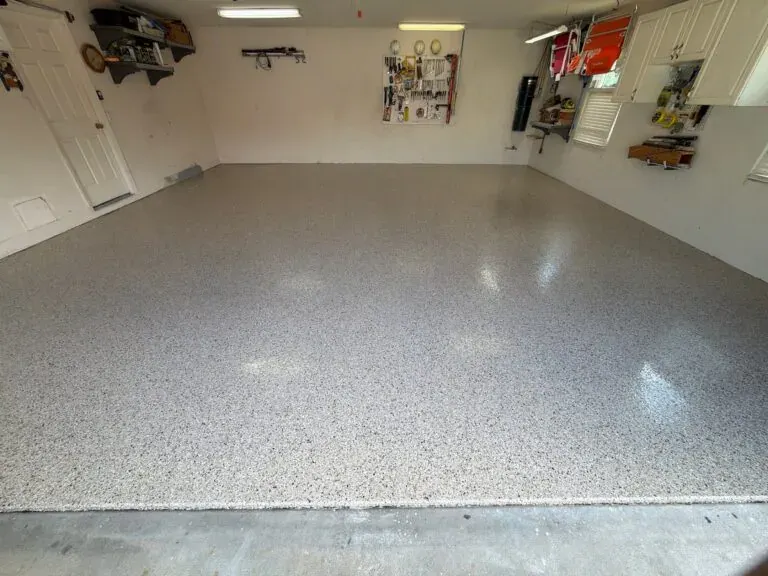
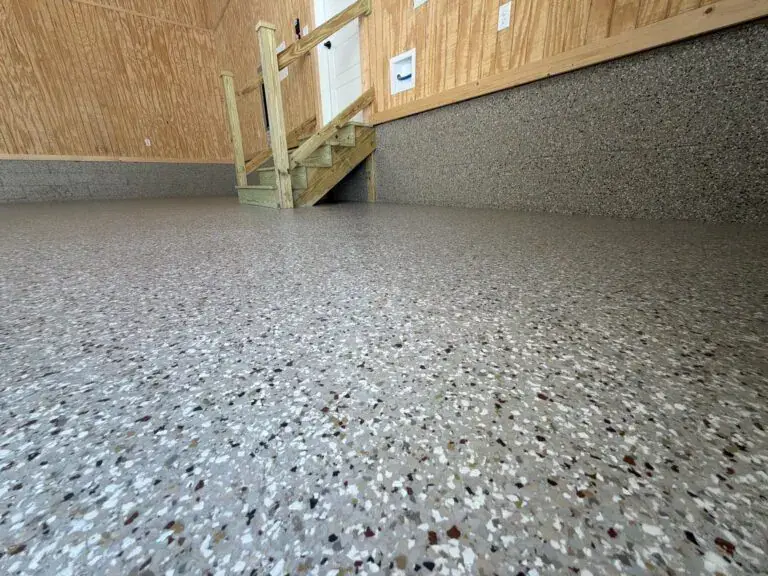
If you want a finished concrete surface built for regular use, paint may not be the right fit. At Checkmate Coatings, we install a polyurea resin base coat—the first protective layer—with decorative flakes covering the coated surface and a polyaspartic clear topcoat, the transparent protective surface layer. This coverage is called a full-broadcast flake finish. Our system is an option for concrete surfaces throughout the property, including garages, patios, pool decks, and driveways.
For more color inspiration, explore our concrete floor paint colors guide.
What Is Acrylic Concrete Paint and How Does It Work?
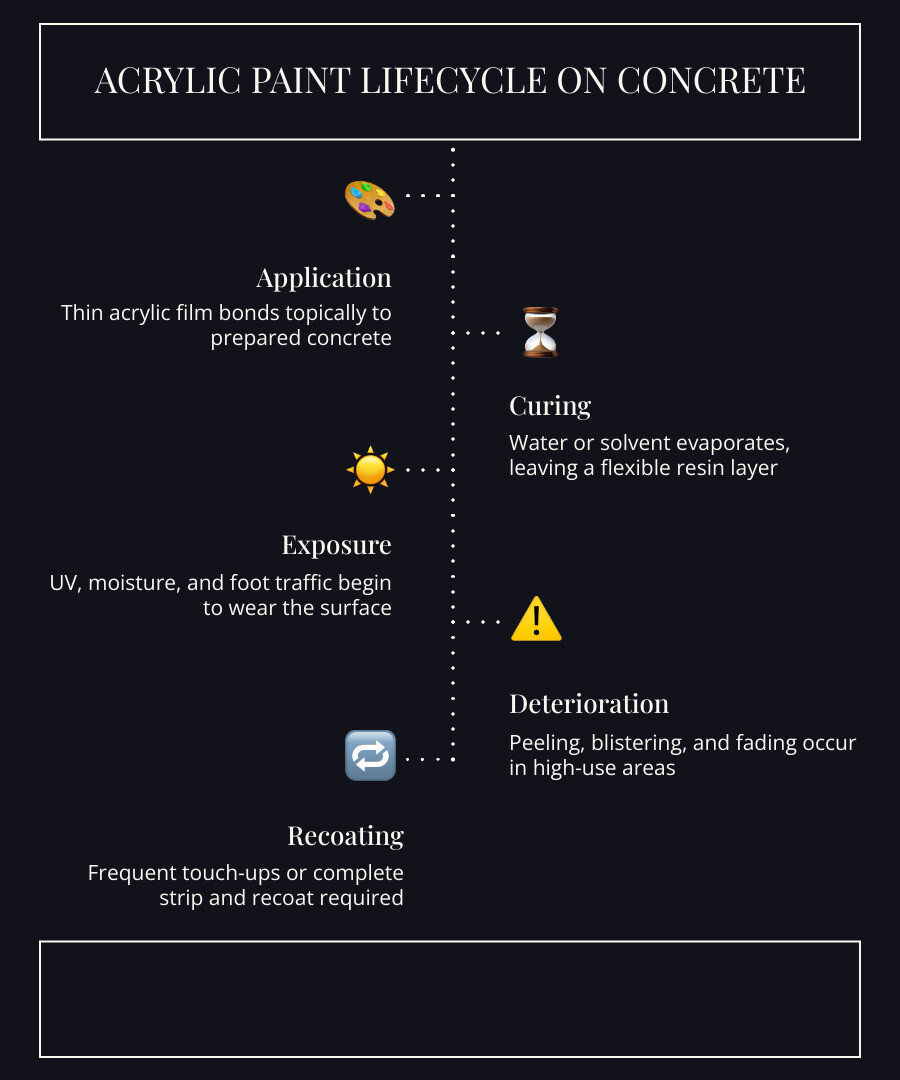
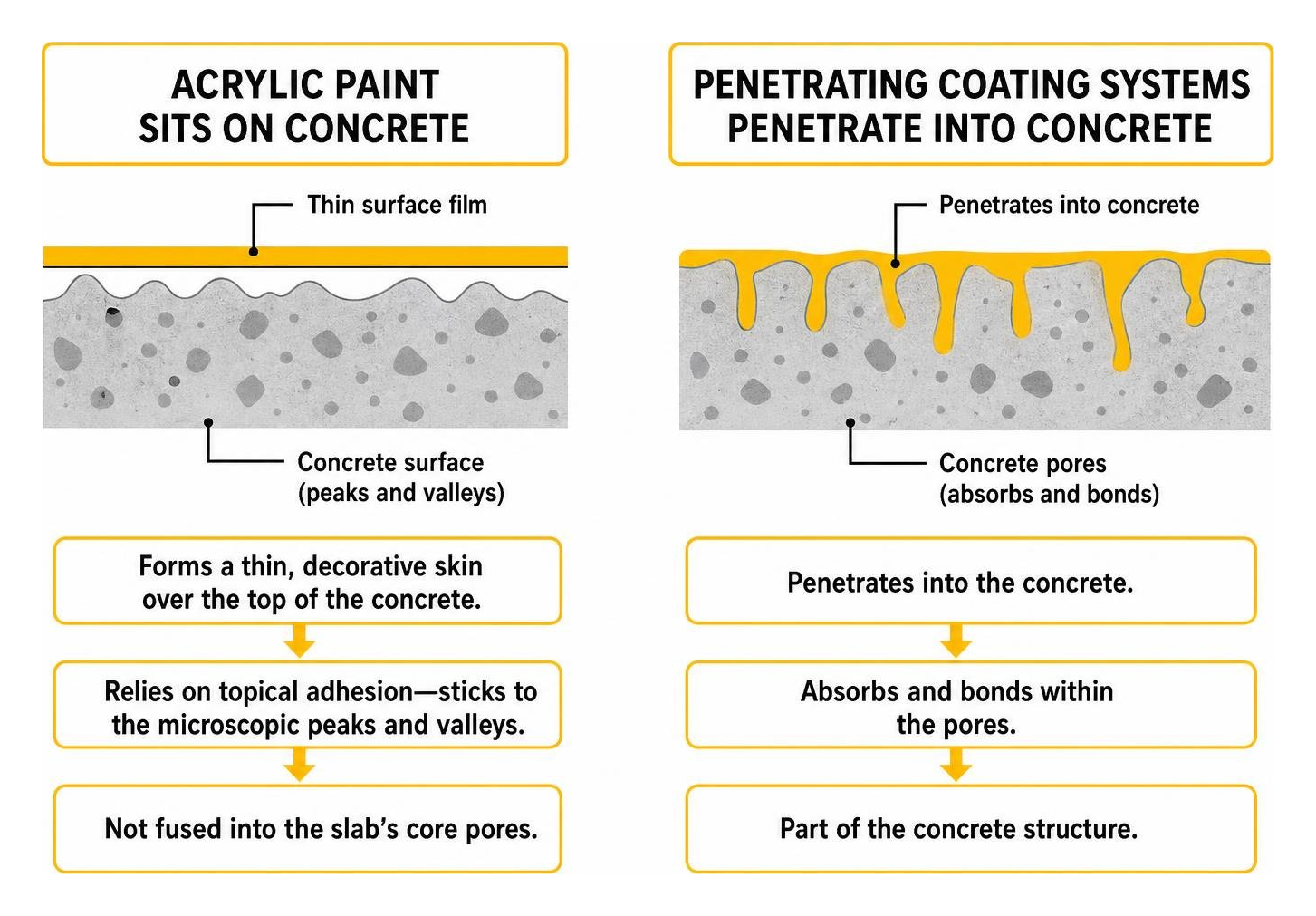
Acrylic concrete paint is a surface coating made with acrylic resins, the binding ingredients that hold the paint together; pigments that provide color; and water or solvents that carry those ingredients during application. Unlike stains that enter the concrete or thicker industrial coating systems, acrylic paint dries into a thin, decorative layer over the concrete slab.
Concrete contains small pores through which moisture can move. A paint’s adhesion—how well it sticks to the concrete—and ability to let water vapor pass depend on its formulation and the condition of the concrete. We would not assume that every acrylic paint handles moisture or bonds in the same way.
Water-Based vs. Solvent-Based Acrylic Concrete Paint
When we explain acrylic paint formulations, we distinguish between two liquid carriers—the liquids that carry the paint’s binding ingredients during application:
- Water-Based Acrylics: These use water as the liquid carrier. For example, Dunn-Edwards describes its PORCH & FLOOR coating as water-based with an eggshell, or low-gloss, finish. That does not establish drying time, cleanup, odor, or wear resistance for every water-based paint.
- Solvent-Based Acrylics: These use solvents—liquids that dissolve or carry coating ingredients. Formulations differ, so we do not assume deeper penetration or better performance simply because a product is solvent-based.
Available Finishes, Gloss Levels, and Color Customization
Available acrylic finishes include low-gloss eggshell and shiny, high-gloss finishes. Manufacturers can add colorants to a tint base, a paint formulated to receive those colorants. If you are exploring ways to ditch the boring gray with fresh concrete floor paint colors, we recommend considering the coating system and its ongoing care alongside the color.
For steps, pool surrounds, and walkways, wet-surface traction is an important part of coating selection. We do not assume that a paint or an added texture provides suitable traction without product-specific information.
The Pros and Cons of Using Acrylic Paint on Concrete
We compare installation requirements and ongoing care when evaluating a concrete finish. For additional background, see this resource on coatings for concrete.
Cost and Application Considerations:
- Lifetime Cost: We compare material and installation costs together with maintenance, recoating, and replacement over the life of the floor—not just the initial paint purchase.
- Application Requirements: Tools, preparation, ventilation, and protective equipment depend on the product’s instructions and safety data sheet, which explains its hazards and safe handling.
- Drying and Recoating: Timing depends on the formulation and installation conditions; we do not assign a single schedule to acrylic paints.
- Cleaning: Follow the specific coating’s care instructions.
Limitations to Compare:
- Wear Resistance: Some acrylic formulations have limited resistance to surface wear.
- Outdoor Exposure: Some formulations can lose gloss or color stability or experience adhesion problems during freezing and thawing.
- Product-Specific Performance: Recoating needs and chemical resistance vary; we do not assign a universal lifespan or resistance rating to acrylic paint.
Where Acrylic Paint Is Marketed—and Why We Choose a Different System
Manufacturers market acrylic paints for surfaces such as porches, patios, basements, and walkways. Those intended uses do not make paint our recommended homeowner solution. We install a polyurea base coat with a polyaspartic clear topcoat and full-broadcast decorative flakes across concrete surfaces throughout the property.
Limitations of Acrylic Concrete Paint on High-Traffic Driveways and Garages
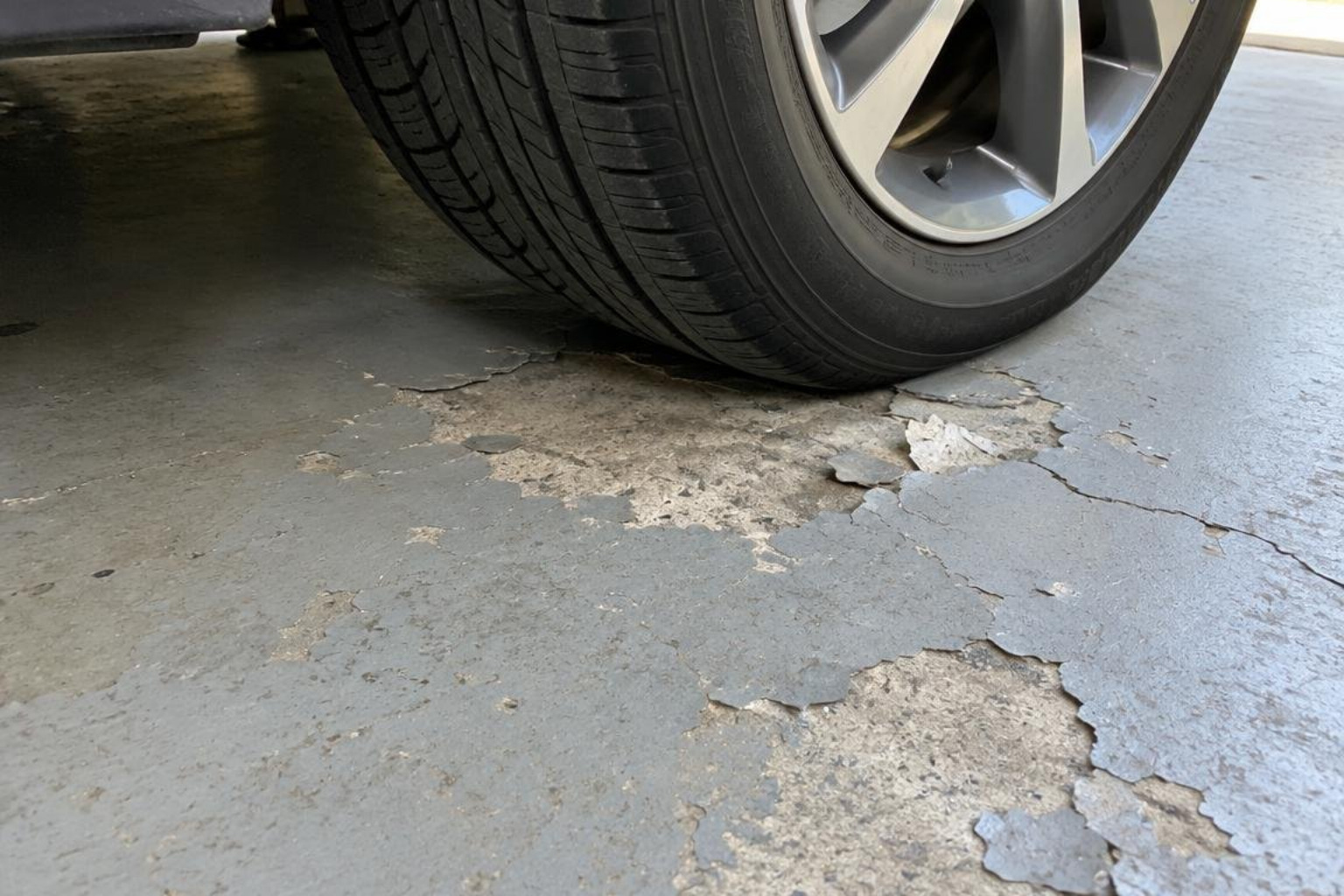
Hot-tire pickup means a coating lifts from the concrete where vehicle tires contact it. Resistance depends on the particular product; not every acrylic coating has the same intended use or performance. For garages and driveways, we choose our coating system, which is designed to withstand vehicle traffic and hot tires.
We consider chemical exposure, moisture, and freezing and thawing when comparing coatings. Adhesion problems can occur with some acrylic formulations, but we would not assume that all acrylic paints respond to automotive fluids or moisture in the same way.
Comparing Acrylic Paint with Our Polyurea and Polyaspartic System
Understanding your options helps you look past upfront paint prices and evaluate true long-term value over the life of your floor.
| Feature / Metric | Acrylic Concrete Paint | Polyurea Base + Polyaspartic Topcoat (Checkmate Coatings) |
|---|---|---|
| Primary Mechanism | Paint film; bonding depends on product and preparation | Polyurea base coat, full-broadcast flakes, and polyaspartic clear topcoat |
| Typical Installation Time | Product- and preparation-dependent | Installed in as little as one day |
| Wait Before Light Foot Traffic | Follow product instructions | Follow our installation crew’s return-to-use instructions |
| Wait Before Vehicle Traffic | Intended use and waiting time vary by product | Confirm vehicle readiness with our installation crew |
| Hot-Tire Resistance | Product-dependent | Designed to withstand hot tires |
| UV Stability (Resistance to Degradation from Sunlight’s Ultraviolet Rays) | Product-dependent; some products are formulated for outdoor exposure | UV stable |
| Finish Style | Solid color / Product-dependent gloss level | Full-broadcast decorative flake finish |
Why We Choose Our System for Homeowners
Some commercial projects specify epoxy, a resin-based coating. We do not recommend it, one-part paints (paints that do not require mixing separate reactive components), do-it-yourself (DIY) kits, or sealers (protective treatments that help limit what enters the concrete) as the homeowner solution. Depending on the product, the time needed for a coating to harden before use and risks such as hot-tire pickup, UV yellowing, peeling, and frequent recoating are reasons we choose our system. For homeowners, we install our polyurea base coat, full-broadcast decorative flakes, and polyaspartic clear topcoat.
Polyurea and Polyaspartic Systems: A Long-Lasting Option
At Checkmate Coatings, we install a high-performance polyurea base coat paired with a polyaspartic clear topcoat and a dense, full-broadcast decorative flake finish.
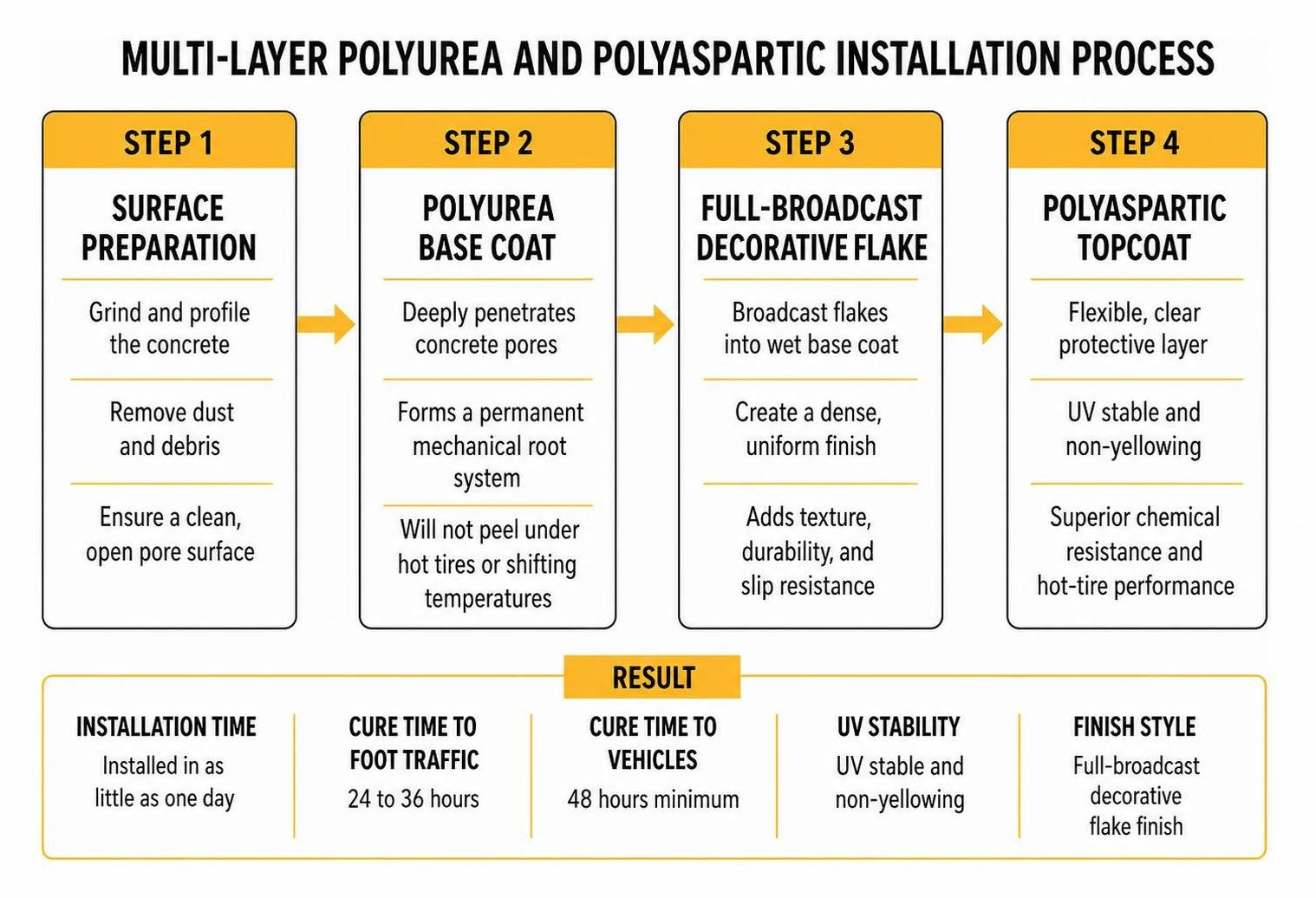
Our polyurea and polyaspartic coating system is designed for heat, moisture, chemicals, heavy use, and hot tires. Its UV-stable topcoat is suitable for outdoor applications. It is an exceptional, durable option for all concrete surfaces throughout your property—from garage floors and driveways to pool decks and outdoor patios.
Surface Preparation and Application Realities for Concrete Paint
Surface preparation is important to coating adhesion. Do-it-yourself products have different preparation requirements; for our system, we diamond-grind the concrete—grind its surface with diamond-abrasive equipment—on every job.
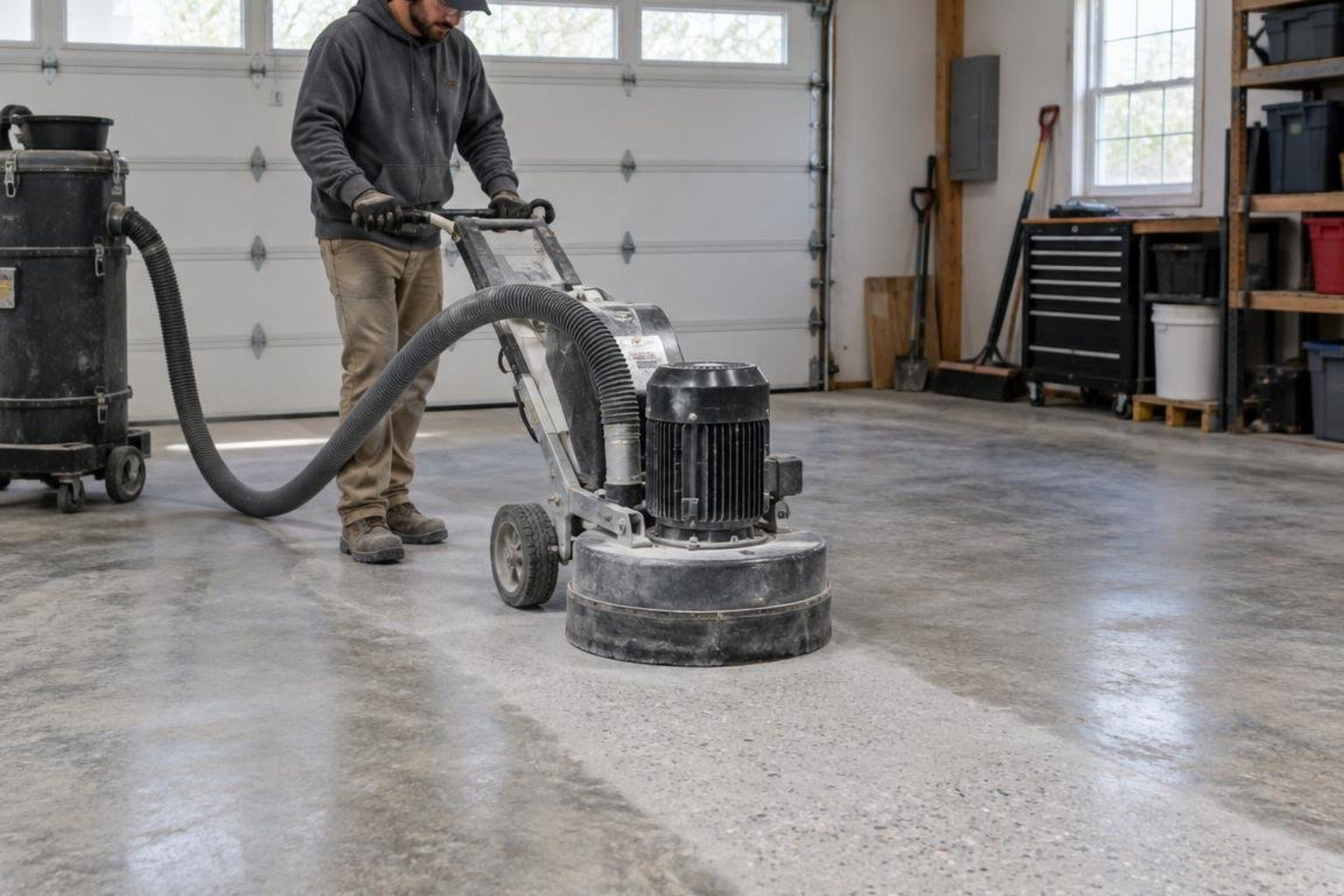
For our installations, we mechanically prepare the concrete by grinding its surface. At Checkmate Coatings, our in-house W2 installation crews—our employees, not subcontractors—use equipment with diamond abrasives to grind the concrete on every job. This process removes surface contaminants, opens the concrete pores, and levels imperfections to create a textured surface for our coating to bond to.
How We Install Our Coating System
Here is how we build our layered coating system:
- Prepare the concrete: We diamond-grind the surface on every job.
- Build the finish: We install a polyurea base coat and decorative flakes across the coated surface.
- Protect the finish: We apply a polyaspartic clear topcoat.
Long-Term Maintenance and Recoating Cycles
Cleaning methods depend on the acrylic product. Check its care instructions before choosing detergents or pressure-washing equipment; we do not apply one cleaning specification to every paint.
Recoating and removal requirements depend on the product, its condition, and the existing layers. We include those potential maintenance costs when comparing a paint finish with our professionally installed system.
Frequently Asked Questions About Concrete Coatings
Can acrylic concrete paint withstand vehicle traffic?
Some acrylic products are marketed for driveways, so vehicle suitability cannot be judged from the word “acrylic” alone. We do not recommend paint as the homeowner solution; we install our polyurea base coat and polyaspartic clear topcoat with full-broadcast flakes, designed to withstand vehicle traffic and hot tires.
How long does acrylic concrete paint typically last outdoors?
There is no single supported lifespan for all acrylic concrete paints. Formulation, preparation, exposure, and use affect performance. We recommend comparing product-specific maintenance requirements and the cost of future recoating rather than relying on a universal year range.
Is a primer required before applying acrylic paint to bare concrete?
A primer is a preparatory coating applied before paint. Whether one is required depends on the particular paint and its application instructions; a separate primer is not universally required. We do not recommend a DIY paint-and-primer system as the homeowner solution. We install our polyurea base coat and polyaspartic clear topcoat with a full-broadcast flake finish instead.
Conclusion: Making the Right Long-Term Investment for Your Concrete
For residential garages, patios, driveways, and pool decks, we recommend our polyurea base coat and polyaspartic clear topcoat with full-broadcast decorative flakes. We believe it is the best choice for homeowners seeking a professionally installed system, with value assessed over the life of the floor rather than just the initial purchase.
When you are ready for a professionally installed concrete finish, Checkmate Coatings delivers a proven solution. We provide high-performance polyaspartic concrete coating solutions featuring a polyurea base coat, a durable full-broadcast decorative flake finish, and a UV-stable polyaspartic clear coat.
Our installations are completed in as little as one day by professional, in-house W2 installation crews—never subcontractors—and backed by our residential Stress-Free Warranty.
Protect your concrete floors with a high-performance system built to last for years to come.